Cirra AI Article
OpenClaw AI Agents: Impact on Enterprise Software and SaaS
Inside this article
- 01Executive Summary
- 02Introduction and Background
- 03OpenClaw Technology and Capabilities
- 04Enterprise Integration and Use Cases
- 05Market Impact and Industry Analysis
- 06Implications for Enterprise Software and Business Models
- 07Security, Risks and Governance
- 08Case Studies and Real-World Examples
- 09Discussion: Implications and Future Outlook
- 10Conclusion
- 11References
Executive Summary
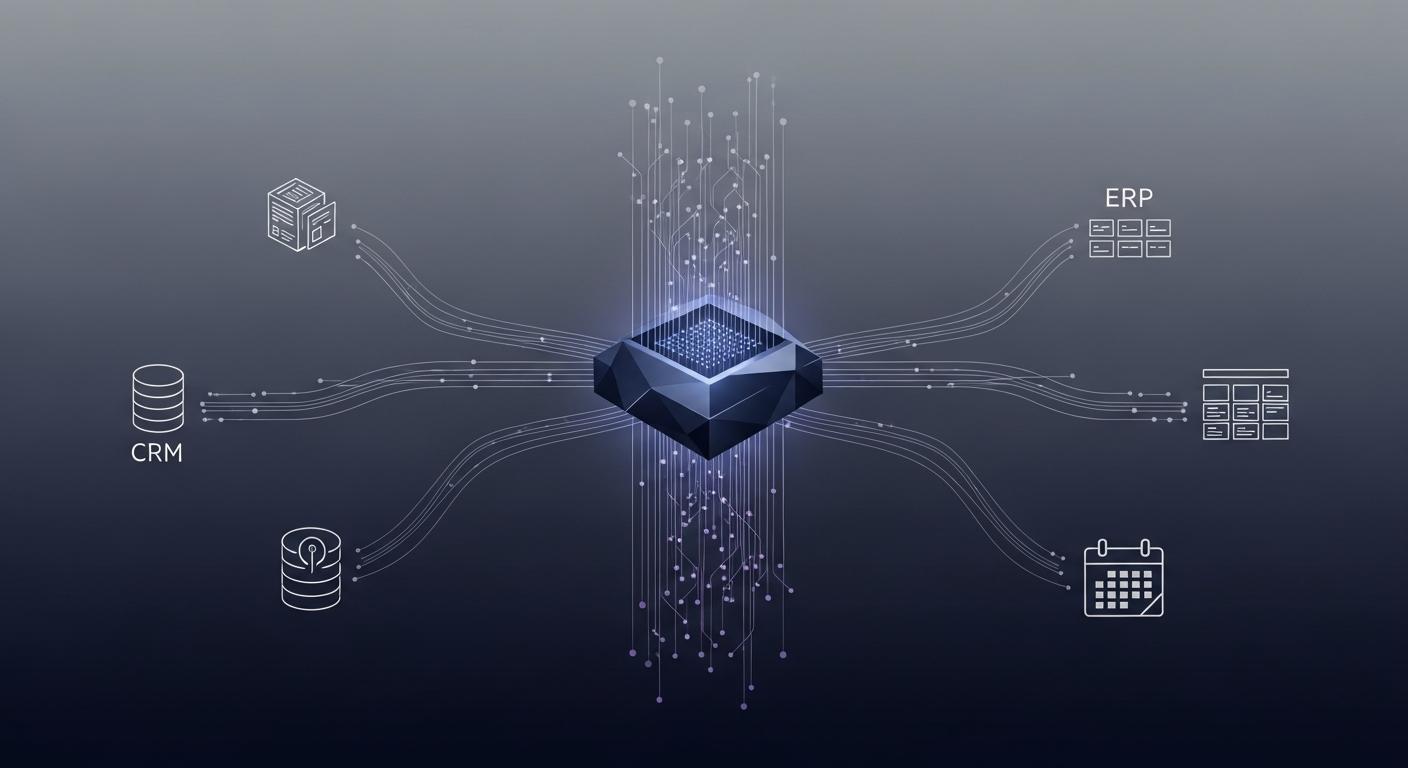
In 2025–26, the advent of OpenClaw – an open-source autonomous AI agent platform – has rapidly disrupted enterprise software paradigms. OpenClaw agents can run on a user’s own computer, interact with business applications (CRMs, ERPs, email, calendars, etc.), and perform complex tasks end-to-end. They operate autonomously (e.g. chaining dozens of actions without human prompts) and can integrate with dozens of tools via screen interactions or APIs. Enterprises have already begun experimenting with OpenClaw for use cases like customer support, sales and CRM updates, financial monitoring, IT ops, and content automation [1].
Industry analysts warn this trend heralds a structural shift in enterprise IT. Traditional seat-based SaaS models are threatened: one agent can replace dozens of human users on SaaS tools, collapsing license revenues [2]. Forecasts for AI‐agent growth are staggering – one market analysis projects spending on personal AI agents to grow from ~$5–8B in 2025 to ~$50B by 2030 (CAGR ~45%) [3]. Gartner predicts 40% of enterprise applications will embed AI agents by end of 2026 (up from <5% in 2025) [3]. At the same time, realworld trials show dramatic productivity gains: e.g. OpenClaw agents autonomously handled ~60% of support tickets in one retail case (cutting support time ~45%) [1], and automated Kubernetes monitoring resolved ~70% of overnight incidents before staff intervention [1].
However, risks and challenges are profound. OpenClaw’s design – e.g. full system access with persistent credentials – breaks many conventional security assumptions [4] [5]. Researchers have demonstrated severe vulnerabilities (for example, “ClawJacked” allowed any website to brute‐force the agent’s local port and take full control [6]), and malicious actors swiftly target OpenClaw configurations to steal tokens and data [7] [8]. Microsoft explicitly warns that “OpenClaw should be treated as untrusted code execution with persistent credentials” and must be sandboxed in isolated environments [4]. In practice, OpenClaw governance is nascent: enterprises must rapidly develop new security and compliance frameworks for AI agents [9] [5].
Major vendors are responding. Salesforce, for example, is integrating agentic workflows through its Agentforce initiative and Slackbot features, and Microsoft is embedding agents via Copilot. Both stress that open systems like OpenClaw “show what’s possible” but “lack the necessary protections” for raw enterprise use [5]. OpenClaw’s creator has joined OpenAI and committed to a community-governed foundation, a move signaling that open agent standards may become industry infrastructure [10] [3]. For enterprise leaders, the message is clear: AI agents are no longer futuristic concept – they are here now, pushing companies to redesign processes, data architectures, and vendor strategies around autonomous agents [11] [5].
This report provides a comprehensive analysis of OpenClaw in the enterprise context: its technology, use cases, impacts on software business models, security implications, and the varied perspectives of industry leaders. We draw on technical analyses, market forecasts, case examples, and expert commentary to examine the past, present, and future of OpenClaw and agentic AI in business software. We conclude by discussing how enterprises can harness these powerful capabilities safely, and how legacy software providers must adapt when “software becomes something AI uses” [12].
Introduction and Background
Enterprise software has long operated on a model optimized for human users. Large organizations deploy dozens of SaaS applications (CRM, ERP, HR systems, collaboration tools, etc.) where each seat is licensed per user. Integration between these systems has typically relied on APIs, ETL pipelines, or RPA scripts. However, the recent rise of generative AI and autonomous agents is upending these assumptions. Beginning with the launch of ChatGPT in late 2022 and the subsequent hype cycles (e.g. AutoGPT in 2023), the idea of software that can act on its own has accelerated. Early agentic AI prototypes emerged, but they generally required cloud services and were limited in scope.
OpenClaw emerged in this context as a watershed moment. Originating as “Clawdbot” (and briefly “Moltbot”), it was launched in November 2025 by Austrian developer Peter Steinberger. OpenClaw is an open-source AI agent framework built for local execution on a user’s own hardware [3]. In contrast to chatbots, agents like OpenClaw can autonomously plan and execute multi-step workflows. They are designed to directly use the computer’s interface (the web, desktop applications, email, etc.) as if a human operator were controlling it. In Steinberger’s own terms, OpenClaw was built on “computer use” – seeing the screen, moving the mouse, typing text – so it can automate virtually any software a person could use [13].
The technical virtues of this approach were clear to many developers. OpenClaw’s architecture is model-agnostic and memory-enabled. It can connect to multiple large language model APIs (OpenAI GPT, Anthropic’s Claude, etc.) so that agents are not locked to a single AI provider [3]. The agent runs locally (e.g. on a Mac or Linux server), retaining persistent state and memory between tasks [4] [14]. It integrates with dozens of messaging and interface channels (WhatsApp, Telegram, Slack, Discord, SMS, voice, etc.) allowing natural interaction. Crucially, OpenClaw allows programmable “skills” – pluggable modules that extend its capabilities (for Excel, custom APIs, data analysis, etc.). This openness and flexibility resonated with the developer community; within days of its January 2026 rebranding, OpenClaw reached an unprecedented popularity: ~190,000 GitHub stars in eight weeks [3] (outpacing any prior open-source project in history).
However, OpenClaw’s power comes with danger. By design, an OpenClaw agent is granted broad system permissions. It can access files, run desktop software, browse the web, and hold long-lived credentials (email, cloud accounts, internal tools) to act on behalf of the user [4] [14]. This means that the agent can do anything the user could do by hand, without the user’s constant oversight. In essence, enterprises have never seen software capable of changing its own state and permissions dynamically based on LLM outputs. This blurs traditional security boundaries and raises novel governance challenges [4] [9].
In practical terms, OpenClaw allows any company to deploy an “AI co-worker”. Imagine an agent that monitors a helpdesk email inbox and drafts responses, or one that logs all sales calls into Salesforce, or one that checks daily balances in QuickBooks and alerts on anomalies. These agents can operate 24/7, scour data for trends, and act on many user-facing systems autonomously, potentially replacing many routine human tasks. Companies began to realize the potential immediately; by early 2026, CIOs in Silicon Valley, finance, law, and other fields reported running pilot projects or production deployments of AI agents [9] [14].
This rapid emergence has forced enterprises and vendors alike to reassess their strategies. On one hand, OpenClaw demonstrates what is technically possible: agents with “memory”, long-lived autonomous workflows, and the ability to orchestrate across systems [11] [15]. On the other hand, it exposes integration and security gaps. The traditional “ship-it-and-forget-it” mentality of SaaS does not cope well with an agent that can modify data and configuration over time [4] [6]. As one IBM researcher put it, the open-source explosion around AI agents shows that “the concept in research papers” has become something “regular people can install, run and experiment with” [15]. In short, the enterprise is confronting a new layer of software – an “agent layer” – that sits between users and applications. Firms and vendors must now decide: will they let agents subvert legacy models, or will they lead the transformation by embedding secure, managed agents into their architectures?
This report examines these issues in depth. We first explain OpenClaw’s capabilities and how it differs from previous automation tools. We then analyze how integrating OpenClaw (and similar agents) into enterprise environments can streamline operations – from CRM and ERP to IT management – using actual use-case data. We review market analyses and predictions (“agent economy” growth, “SaaSpocalypse”) that highlight the impact on software business models and budgets. We discuss multiple perspectives – venture analysts, CEOs, security experts, legal counsel, and established vendors – on the opportunities and risks. We present concrete evidence (metrics, surveys, pilot results) and case examples of OpenClaw in practice. Finally, we consider future implications: how should enterprises adapt their data architecture, governance, and software purchasing in response to autonomous agents? We offer conclusions and recommendations, supported by extensive citations to industry reports, news, and expert commentary.
OpenClaw Technology and Capabilities
OpenClaw represents a new class of AI agent platform. Technically, it is an open-source agent runtime that automates user workflows on any computer. Unlike a chatbot that merely answers one-off queries, an OpenClaw agent is designed for long-running, goal-oriented tasks. Once given an objective (e.g. “process all yesterday’s support tickets”), it will plan steps, invoke multiple tools, and continue working until the goal is achieved or it is instructed to stop.
Architecture and Design
-
Local‐first execution. OpenClaw runs on the user’s own hardware (Windows, macOS, or Linux), rather than in a remote cloud. This “local-first” approach means the agent has native access to the local environment – filesystem, applications, and APIs – with minimal latency. It also allows sensitive data to remain on-premises, meeting some privacy-conscious organizations’ preference for not sending data to untrusted clouds [3]. Many analysts saw this as a key advantage: by late 2025, observers noted that generational AI had evolved from cloud chatbots (2022–24) to local agents (2026) precisely because “the agent is software, not a device” [3].
-
Multi-Channel Integration. OpenClaw natively integrates with dozens of popular communication channels and applications. Immediately after launch, the community added support for over 50 services – including WhatsApp, Telegram, Slack, Discord, SMS/text, Voice (Twilio), email, Google Calendar, and more [3]. This means users can interact with their agent through the same messaging apps they already use. For example, a sales rep might text the agent in Slack or WhatsApp to issue commands or ask about status. This multi-channel design lowers the barrier to use because employees do not have to learn a new UI – they can simply converse or message the agent.
-
Model Agnosticism. OpenClaw is not tied to any single LLM provider. It can be configured to call multiple LLM APIs (OpenAI’s GPT-4, Anthropic’s Claude, Amazon’s Titan, etc.). In practice, users often allow agents to query different LLMs for different tasks (e.g. a language-specialist model for summarization, a code-specialist for scripting). This “model-agnostic” architecture prevents vendor lock-in and allows enterprises to balance cost/quality/trust across providers [3].
-
Persistent Memory and State. Unlike a chatbot that forgets context between sessions, an OpenClaw agent maintains a long-term memory. It stores information (e.g. notes about a customer’s preferences, or credentials) in encrypted files on the computer. This memory allows the agent to recall prior interactions and user preferences over time. For example, one user could train their agent about their best friend’s favorite gift preferences, and the agent would “remember” in the future, rather than having to re-learn it each session [14]. The agent also keeps persistent authentication tokens (OAuth keys, API keys) so it can continue workflows across days without re-login [4]. Microsoft specifically warns that “with persistent tokens and stored state, the device hosting [OpenClaw] becomes part of an ongoing automation loop” [4].
-
Direct UI Automation (“Computer Use”). OpenClaw’s breakthrough is that it drives applications exactly like a human. Rather than relying only on APIs, it can open a web browser, click buttons, fill forms, or operate GUI windows. In practice, this means the agent can use any software that you could navigate by hand. A recent analysis explained: OpenClaw “interacts with software the same way a human does. Point it at a web app, give it a goal, and it figures out the clicks” [13]. This “computer‐use” approach bypasses a common enterprise problem: many internal or legacy apps have no modern API to integrate with. OpenClaw simply uses the UI that was built for humans.
-
Reasoning and Flexibility. Unlike traditional Robotic Process Automation (RPA), OpenClaw does not rely on fixed scripts or pixel-bound instructions. It uses LLM reasoning to adapt in real-time if the UI changes. For example, if a button moves slightly or a label changes, an RPA bot would break, but OpenClaw can understand from the context what to do next. As one analyst put it: “RPA bots are brittle… Move a button three pixels to the left and the whole workflow breaks. OpenClaw doesn’t follow a script. It reasons about what it sees” [13]. This ability dramatically expands the class of tasks it can handle. Developers have noted that OpenClaw can infer ambiguous steps and handle edge cases that would confound line-by-line automations [13] [1].
-
Skill Ecosystem. The platform supports a community of “skills” (plugins) that extend its default capabilities. Skills exist for tasks like data retrieval, database queries, interacting with specific SaaS APIs (e.g. Salesforce, HubSpot), and even controlling hardware. Many users have uploaded skills to public repos (called “ClawHub”) enabling agents to, for example, look up stock prices, fetch weather, process spreadsheets, or call specialized internal systems. However, these skills also expand the threat surface, as we discuss below [7] [9].
Overall, OpenClaw’s architecture fuses decades-tested technologies (browsers, terminals, LLMs) into a highly flexible agent framework [13]. It offers maximal autonomy: the agent can be given a goal and then “just run” without user intervention [13]. As one user noted, it is more like a daemon or background service than a dialog bot [13]. The trade-off is that this power comes permissive by default. There is no built-in permission sandbox – by design the agent will do anything necessary to achieve its goals [13] [5]. This design stands in stark contrast to traditional enterprise software philosophy: instead of “Are you sure you want to do this?” checks, OpenClaw assumes “yes, do whatever it takes.” We explore the implications of this openness in Section Security and Governance below.
Capabilities vs. Legacy Tools
OpenClaw is often compared to earlier automation solutions. It effectively overcomes key limitations of past approaches:
-
Chatbots (GPT, Claude, etc.): Chat-based assistants (Siri-like or web LLM demos) have no intrinsic way to act on your data or accounts. By contrast, OpenClaw executes actions – e.g., reading your real email inbox, filling spreadsheets, logging into business apps – rather than just generating text. As one Forbes analyst observed, OpenClaw “can function and act in ways… making it indistinguishable from its human [user]” [14]. In other words, the agent has “a clock or a heartbeat of its own” and can drive a user’s workflows, unlike a chatbot that waits for prompts [14].
-
Robotic Process Automation (RPA): RPA platforms (UiPath, Automation Anywhere, Blue Prism) have offered UI scripting for years. However, they required manual flowchart design and were notoriously brittle to changes. OpenClaw inherits the idea of GUI automation but injects flexible AI planning. It “reasons about interface changes” and can handle ambiguity. A recent analysis even compared the two: it argued that OpenClaw’s use of LLMs is “the leap from automation to agency” – enabling it to tackle the “long tail” of enterprise software (legacy systems, custom admin portals) that RPA aimed at but could not fully address [13]. In short, OpenClaw is effectively RPA on steroids – no configuration needed for each new workflow, as long as the agent can see and interpret the UI.
-
Intelligent Assistants (Sales Copilot, Gmail plugins, etc.): Many SaaS providers have added AI “suggestion” features. But these typically still require a human to initiate the action and remain within a single app’s UI. OpenClaw breaks these app barriers: it can span across unrelated systems. For example, one agent could read a sales lead’s email in Gmail, then open Salesforce and update that lead’s record, and schedule a calendar invite – all with no human measure. This end-to-end autonomy (earning praise such as “Jarvis from Iron Man” in popular media [16]) is unmatched by any incumbent product today.
In summary, OpenClaw’s capabilities represent a fundamental expansion of what enterprise software can do. It turns any existing application into an API endpoint for AI: if a human could use a system, the agent can too, but continuously and intelligently. This unleashes new automation potential across the typical enterprise stack (CRM, ERP, Git, ticketing, email, cloud consoles, etc.) which we detail next.
Enterprise Integration and Use Cases
The ability of OpenClaw agents to interact with core business systems means enterprises can automate many traditionally manual processes. Several patterns and use cases have already proven valuable:
Connecting Data and Systems
Before looking at specific examples, it is useful to understand the integration context. Enterprises have been grappling with silos of data and point-to-point ETL pipelines for too long. As one industry analyst noted, “Extract-transform-load (ETL) pipelines no longer work for AI: batch copies and brittle jobs can’t feed agents the fresh context they need” [11]. Instead, firms must adopt streaming, event-driven integration. In other words, produce a live feed of business events (sales orders, customer messages, inventory updates) that agents and analytics can subscribe to instantly. A LinkedIn newsletter explains that with agents in production, “real-time integration is no longer an optimization – it’s the foundation” of enterprise data architecture [11].
Practically, teams are connecting all relevant data sources into a unified access layer for the agent. For example, integration platforms (like Coupler.io) advertise OpenClaw connectors to hundreds of systems (CRMs, ads, finance, analytics) so that an agent can query live data with one natural-language query [17]. Data warehouses and lakehouses (ClickHouse, Snowflake, etc.) are also being reconfigured as continuously updated stores that an agent can query directly. The goal is that when an agent asks “Which customer segment drove most revenue this quarter?”, it can instantly retrieve up-to-the-minute results rather than stale data. This real-time pipeline approach reduces synchronization headaches and doubles as an audit trail, giving agents official “look-ups” rather than having to switch between screens. By running a Change Data Capture stream from key databases into a common platform, organizations align all analytics, search indexes, and agent queries on one source of truth [11].
This streaming context also enhances agent security: enterprises can embed identity and governance in the data layer. For example, issuing per-agent certificates and ABAC policies on event streams ensures an agent only sees data it is entitled to. End-to-end observability (logging every agent API call, UI action, and result) becomes mandatory. In short, deploying OpenClaw forces a re-architecture where data flows must be real-time, unified, and secured [11].
Customer Support Automation
One of the quickest returns on deploying OpenClaw has been in customer support. Support teams deal with high volumes of routine inquiries (order status, return policies, common requests) that follow predictable patterns. OpenClaw agents can process these automatically by monitoring an email or chat support channel, interpreting the query, and generating responses. A typical architecture is: the agent pulls new support tickets (from email, Zendesk, Intercom, etc.), checks them against a knowledge base skill, and drafts a reply. For straightforward issues, it can send the response on its own; for sensitive or complex cases, it prepares a message for a human agent to review and approve [1]. Humans always have the final say, but the bulk work is done by AI.
A documented real-world example illustrates the impact. An e-commerce retailer deployed OpenClaw on its support email workflow. The agent learned to handle common questions – checking tracking numbers, explaining refund policies, giving shipping updates – without human intervention. According to the report, the AI covered roughly 60% of support volume autonomously [1]. For the remaining 40%, it auto-generated draft replies and summarized context for the staff. The result: support team workload fell by about 45% (nearly halving the human time spent) [1]. Response times also improved for routine queries. This division of labor (“agent handles volume, human handles nuance”) produced better outcomes than either outsourcing everything or doing 100% manual replies [1].
Across industries, the pattern is similar: monitoring tools (email, chat, social media) feed incoming queries to the agent, which uses NLP and workflow skills to triage or resolve tickets. In financial services, agents have been piloted to answer standard banking queries; in IT support, agents will log incidents or suggest fixes (see IT Operations below); in HR, agents can answer routine employee questions about benefits or policies. The common insight is that OpenClaw can achieve “first-contact resolution” for many cases by accessing up-to-date databases and knowledge bases. Human agents then focus on exceptions. As one consultant notes, an agent can supply the first draft and “never forget to log a call” or send a necessary message [2] – eliminating human error on tedious steps.
Sales and CRM Workflows
Sales teams are often burdened with administrative tasks around customer data and follow-ups. OpenClaw has rapidly proven its value in this domain. A report on top use cases highlights three high-impact sales automations: contact discovery, interaction logging, and follow-up management [1].
-
Automatic Contact Discovery: An OpenClaw agent can monitor a salesperson’s email inbox and calendar. Whenever a new contact appears (e.g. an unfamiliar email exchange or meeting invite), the agent automatically researches the contact. Using web search skills (LinkedIn, Crunchbase, etc.), it gathers company info, role, and context. It then creates a new lead or contact record in the CRM and delivers a briefing to the salesperson before any meeting [1]. This saves salespeople from manually entering data for dozens of cold emails and meetings.
-
Meeting Logging: After client calls or meetings (recorded via calendar events), the agent can generate summaries and update the CRM. For example, a rep might dictate a few bullet points via a messaging app; the agent then composes detailed meeting notes and logs them under the deal record. In one case, a routine 15-minute data entry task was reduced to a 30-second voice note [1], effectively eliminating the lag between talking to a prospect and saving those notes.
-
Proactive Follow-Up: Perhaps most powerful is monitoring the pipeline. OpenClaw agents can routinely scan the CRM for deals or tasks that have stalled. If a deal has had no activity for a week, the agent can flag it and propose follow-up actions. At 8:00 AM each morning, a sales rep might receive a Slack notification: “Three deals in your territory have been inactive for 7 days – suggested messages are prepared.” The rep reviews (modify if needed) and sends them. This catches leads that would otherwise slip through the cracks. As one write-up notes, with this system “deals [no longer] fall through the cracks due to forgotten follow-ups” [1].
These kinds of CRM automations have a dual effect: they increase data hygiene (better recordkeeping) and free sales staff to talk to customers rather than punching keys. A broad analysis called this shift “the intelligent wrapper” effect: OpenClaw doesn’t replace Salesforce as a system of record, but it replaces the humans who used to operate it [2]. For example, if a CRM charges $100/seat for 50 reps ($5,000/month), one agent performing all reps’ updates would collapse that usage, potentially cutting vendor revenue by 98% [2]. In practice, this means salesforces and CRMs will need new models (see Implications section).
Table 1: Example OpenClaw Use Cases in Enterprise
| Use Case Domain | Specific Use Case | Impact / Outcome (example) | Source / Notes |
|---|---|---|---|
| Customer Support | Automate email/chat support (e.g. order inquiries) | ~60% of tickets auto-resolved; support time ↓45% [1]; faster response | [25][27] provide real-world examples. |
| Sales & CRM | Lead creation, meeting logging, follow-ups in CRM | Meeting notes entries cut from 15 mins to 30 sec [1]; stale deals caught | See text; Sateme et al example. |
| Financial Operations | Automated cash-flow and invoice monitoring | Instant alerts on thresholds; significant time savings in reporting [1] | Common patterns; agents do data gathering [1]. |
| IT / DevOps | Server monitoring and self-healing (Kubernetes) | ~70% of overnight incidents auto-resolved; MTTR ↓ ~40% [1] | Community “Reef” agent example [1] |
| Marketing / Content | Content repurposing, competitive intelligence alerts | Generate social posts (~2 min vs ~45 min) [1]; auto reports on SEO shifts | Outlined pipelines for content and SEO [1]. |
| Multi-Agent Teams | Coordinated strategy, analytics, and dev agents sharing memory files | Integrated KPIs and plans; agents read shared goals and metrics [1] | Example of a startup using 3 agents in tandem [1]. |
(Table adapted from documented OpenClaw community case studies [1].)
Financial Monitoring and ERP Automations
Finance, accounting, and ERP-related processes are another fertile ground. OpenClaw agents can connect to bookkeeping systems (QuickBooks, Xero, SAP) and continuously monitor key metrics. For example, a cash-flow agent might check daily bank balances; if the cash drops below a threshold, it immediately alerts the CFO and runs projections. Invoicing and payables can be automated: if an invoice date passes 7 days, the agent sends a polite reminder email; at 21 days, a sterner notice, all without manual oversight [1]. Expense reporting is similarly streamlined: an agent can parse bank transactions (via Plaid or direct bank APIs), auto-categorize expenses using learned patterns, and flag anomalies for review. Budget tracking agents can compare actual spend to budgets and generate variance alerts each month. The upshot is that finance teams spend far less time on raw data collection and routine alerts, and far more on analysis. As one report observes, “the agent does the data gathering and initial analysis autonomously, surfacing only what requires human attention or decision-making” [1].
ERP systems (SAP, Oracle, MS Dynamics, etc.) stand to be transformed by agent integration. In principle, an OpenClaw agent can serve as an “intelligent overlay” on an ERP database. For example, in supply chain modules, the agent could ingest production schedules and external data (weather, market trends) to predict machine failures or demand spikes before they happen, and then proactively adjust orders or schedules [18]. In customer-facing modules, an agent could analyze purchase history and web behavior to create hyper-personalized marketing offers arrayed in the ERP’s CRM data [18]. A vendor-authored analysis suggests that with OpenClaw “integrated”, an ERP becomes a predictive engine: spotting fraud, optimizing inventory, and delivering custom dashboards automatically [18]. While much of this is forward-looking (OpenClaw+ERP is a vision rather than a product today), it illustrates that every part of the ERP could in theory be augmented by agentic intelligence, turning a passive data warehouse into an autonomous advisor.
In practice, integrating OpenClaw with complex ERPs requires robust connectors or custom skills. However, several community tools have begun to address this. The “OpenClaw Directory” lists a talent lead skill for Salesforce and other ERP-related skills (e.g. inventory lookup, finance APIs) that any agent can use. Coupled with approaches like Change Data Capture events from ERP tables streaming into a data lake, agents can have near-real-time views of ERP state. The trend is clear: by making OpenClaw speak the language of existing databases and services, companies can unlock the deep data in their ERP layers for AI automation.
IT Operations and DevOps
OpenClaw’s abilities also extend to IT management. The classic use case is self-healing infrastructure. Agents can be set up as “watchdogs” running periodic health checks on servers, clusters, and cloud resources. In this pattern, the agent’s heartbeat script might query system metrics (disk, CPU, memory), service statuses, and SSL certificates every few minutes [1]. If it detects an anomaly, it evaluates severity: for minor issues it may attempt automated remediation (e.g. clear logs, restart a service, or scale up a container) and then alert on-call staff via Slack or Telegram. For critical failures, it instantly pages the team and gathers diagnostic data (logs, configs) to expedite incident response [1]. Because the agent holds admin credentials, it can perform privileged actions.
A community example of this pattern reported dramatic results. A small company let an OpenClaw agent (“Reef”) watch its Kubernetes cluster overnight. Over a test period, Reef autonomously handled 70% of system incidents before a human was ever woken up for the issue [1]. For the remaining cases, Reef had pre-gathered all context (logs, stack traces), which was credited with reducing average time-to-resolution by over 40%. Such outcomes – resolving most problems without sacrificing human sleep – are investing interest in agentic DevOps.
More broadly, OpenClaw can string together DevOps workflows. For instance, it could manage a software release pipeline: an agent might merge code branches when certain labels appear, run automated tests, and deploy to staging if tests pass. Some even envision a fully agentic DevOps team (see Discussion). On demand, the agent could pull metrics (from Prometheus, Datadog) and compare them with goals stored in a repository, triggering actions (rollback, optimize) as needed.
Content, Marketing, and Knowledge Work
Beyond “hard” data tasks, OpenClaw can assist creative workflows. In marketing, agents can monitor social media, news, and SEO rankings. For example, an agent might watch competitor websites and news feeds for announcements, then auto-generate a weekly intelligence briefing summarizing any important moves [1]. In content production, an agent can repurpose material: when a new blog post is added to a shared folder, it could automatically compose social media posts tailored for each channel (LinkedIn, Twitter, newsletter), dramatically shortening turnaround. One case study notes transforming a 45-minute manual social post task into a 2-minute automated job [1]. Similarly, for SEO, agents can track daily rank changes and alert on significant shifts with suggested actions.
Knowledge work is increasingly a target as well. For example, in a small software startup, the community has experimented with multi-agent teams for internal ops. The “Strategy Agent” (using Claude) maintains quarterly objectives and writes summaries, the “Metrics Agent” (using GPT-4o Mini) polls analytics dashboards hourly, and the “Development Agent” (using GPT-4o) monitors GitHub issues and auto-drafts release notes. These agents share memory files (like a GOALS.md and METRICS.md) so that strategy, metrics, and dev tasks stay in sync [1]. In effect, the company built an “AI staff” co-working with engineers by updating shared documents. While still an experiment, it illustrates that agents can form coherent ‘teams’ when properly integrated.
Taken together, these use cases show that OpenClaw can touch almost any enterprise domain where tasks follow logical, repeatable patterns. The enlisted real-world examples – in support, sales, finance, IT, marketing – demonstrate substantial time savings and efficiency gains [1]. Importantly, these are not “one-off hacks” – they reflect systematic patterns validated by multiple adopters. The common insight is that OpenClaw automates the busywork: routine checks, data logging, simple decision rules – thereby freeing humans for higher-value creativity and relationship tasks [1].
Market Impact and Industry Analysis
The emergence of OpenClaw has ignited both market excitement and concerns. Growth projections for AI agents are now massive, reflecting the belief that agents will become a new computing paradigm. Among analyst reports:
-
Agent Economy Growth. MarketsandMarkets projects the global AI agent platform market (purpose-built multi-agent systems) to grow from $5.4 billion in 2024 to $48–52 billion by 2030 (CAGR ~45%) [3]. Grand View Research estimates an even larger scope (“AI-augmented activity”) reaching $46.3 trillion by 2033 [3]. Gartner forecasts that by 2027, AI-driven productivity across enterprise apps could produce a $58 billion “shakeup” in revenue, and by 2028 up to $15 trillion in B2B transactions will be AI-mediated [3]. Table 2 summarizes key projections. These numbers, while broad, signal that investment in agent technologies is accelerating; nearly all analysts agree on exponential growth.
-
Enterprise Adoption Rate. According to Gartner, the percentage of enterprise applications embedding AI agents will jump from under 5% in 2025 to about 40% by end of 2026 [3]. This 8× increase in one year is unprecedented – faster than CDNs or microservices adoption in the past decade. It reflects both new agent-ready offerings and quick uptake by forward-leaning organizations. In practice, we are already seeing major R&D efforts by incumbents: for example, Microsoft and Google quickly incorporated “agents” into Copilot/Gemini, and companies like Salesforce spun up dedicated agent groups (e.g. Agentforce) within months of OpenClaw’s debut [16] [5].
-
Investor Sentiment (“SaaSpocalypse”). Financial markets have taken note. In February 2026, as OpenClaw went viral, the share prices of certain enterprise software companies sank sharply [16]. Collaboration platform Monday.com, CRM leader Salesforce, and software-tax firms (Thomson Reuters tax arm) each saw drops of ~30% in days [16]. Analysts attributed this to concerns that AI agents would dramatically reduce future license revenues. One matte, SaaSpocalypse analysis even estimated that over $2 trillion in market capitalization (on the S&P 500 Software index) was wiped out in anticipation of agent-driven disruption [2]. The rationale is that if enterprises can do the same work with automated agents, then the demand for “per human seat” software licenses will collapse. Surveys suggest CIOs are already reallocating budgets: IT budgets for AI tools were reported up ~100% year-over-year, while overall IT spending rose only ~8% – implying much of the AI funding came at the expense of legacy apps [2].
-
Analyst Perspectives. Industry experts are divided. Many view the OpenClaw moment as a paradigm shift. Futurum chief strategist Shay Boloor called it an “inflection point” where “millions of AI agents” soon handle tasks once done by people [16]. Gartner and other firms emphasize that the competitive frontier lies in how efficiently software enables AI agents. Conversely, some caution the hype is overblown. Wedbush analyst Dan Ives warned that narratives of AI agents instantly displacing enterprise software are “way overdone” – a “fictional tale” of doom among panicked investors [16]. He expects the market to normalize as companies clarify how to adopt these tools responsibly. Others (e.g. Forbes India coverage) have highlighted both the fascination and alarm: OpenClaw’s agent society created memes and a Crypto-scam outbreak, showing that real-world agent autonomy can be chaotic [14]. In short, the dominant view is that agents will transform business software, but the tempo and path of that change remain uncertain.
-
Markets and Vendors Responding. The OpenClaw “open source moment” quickly prompted action by incumbents. Major cloud and AI vendors accelerate agent roadmaps: Microsoft doubled down on Copilot, Google on Gemini, while startups rushed to add agent capabilities to analytics and integration platforms. Notably, OpenAI acquired OpenClaw’s founder, signaling mainstream embrace [10]. Many enterprise vendors are now positioning themselves as agent-friendly: Salesforce launched “Agentforce” to embed proactive agents into its CRM suite [5]; IBM partnered with Anthropic on a secure agent framework (MCP) for enterprises [15]; and niche RPA firms announced “GPT-for-RPA” hybrids. OpenClaw’s rise also helped raise $X in new funding for startups focused on agentic AI (established players like Mago, Rewind, and newcomer “AI X” have collectively raised hundreds of millions in venture funding during this period, according to PitchBook).
Table 2: Agent Market Size Forecasts and Adoption Rates
| Source | Market / Scope | 2024–2025 Value | Projected Value (Year) | CAGR / Growth |
|---|---|---|---|---|
| MarketsandMarkets | Global AI Agent Platforms | $5.4B (2024) | $48–52B (2030) | ~44–46% |
| Grand View Research | U.S. AI Agents (TAM) | $2.2T (2025) | $46.3T (2033) | ~46.9% |
| Gartner (Enterprise) | % Apps embedding AI Agents | <5% (end 2025) | ~40% (end 2026) | 8× increase |
| Gartner (GenAI + Agents) | Enterprise Productivity | — | $58B (2027) | — |
| Gartner (AI-enabled B2B) | AI-mediated B2B commerce | — | $15T (2028) | — |
Sources: Industry analyst reports and market studies [3].
These data underscore the stakes: enterprises face rapidly rising expectations for AI agents. Whether these forecasts are fully realized or not, the consensus is that the agent layer will become a central interface for future work. Teams that ignore this trend risk obsolescence; those that master agent integration stand to leap ahead.
Implications for Enterprise Software and Business Models
OpenClaw’s rise is forcing a reevaluation of how enterprise software creates value. The traditional model – selling per-seat licenses to human users interacting via GUI dashboards – is directly challenged when AI agents can perform many of those interactions. Multiple analyses highlight key shifts:
-
Seat-Based Licensing vs. Outcome-Based Automation. In the old model, more users = more licenses sold, which scales revenue for a SaaS vendor. OpenClaw breaks that map. For instance, a CRM charging $100/user/month for 50 sales reps ($5,000/month) suddenly becomes nearly free if one agent updates all accounts via the API [2]. This “intelligent wrapper” effect means one agent can replace dozens of seats. As a result, many companies forecast that vendors must move away from per-seat pricing. They propose new models: charging per API call, per outcome achieved, or on AI compute consumed. Some vendors are already experimenting with “agent seats” or tiered plans for AI automation. But transition is painful: sales teams used to expanding seats must now sell to AI/infra budgets. Vendors that cling to the seat model risk rapid revenue shrinkage as agent adoption grows [2].
-
Systems of Record vs. Point Solutions. Another implication is that software which owns core data remains valuable, while narrow UI-focused tools risk redundancy. An OpenClaw agent still needs some system to read and write data. Vendors with strong APIs and data stores (e.g. Salesforce as CRM data repository, Google as email/data platform) will likely pivot their pricing toward usage-based models (API calls, storage, automation credits). In contrast, pure “point solution” apps that only provide alternative UIs (say, a meeting scheduler or an invoicing app without deep data holdings) may see demand collapse once agents can use endpoints directly. An analysis puts it succinctly: “If the agent can do the job without our UI, you’re a point solution; if the agent needs your data and your API, you're infrastructure” [2]. Indeed, customers are reclassifying their software: broad platforms like ERP or cloud providers are safe and become infrastructure, while many startups with niche workflows must either become the agent’s chosen provider for that function or face extinction.
-
Consolidation of Apps (“App Fatigue”). Because agents can coordinate many tools from one interface, companies experience “app fatigue” differently. Instead of people running 10+ apps daily, some CIOs foresee agents consolidating them. One commentary notes that with agents, the complexity shifts from “human learns 10 UIs” to “agent integrates 10 APIs” [2]. The net effect is likely fewer, more integrated platforms. Indeed, some enterprises are already reducing headcounts of point tools: for example, replacing multiple expense or scheduling apps with one agent-driven solution. Agents become the new integration hub. In this way, openclaw is a catalyst for vendor consolidation (favoring companies that can serve as broad hubs) and for enterprises negotiating multi-tool contracts differently (fewer vendors overall, focusing on system safety and API richness).
-
DevOps and Process Orchestration. Parallel to the above, the OpenClaw trend is pushing the DevOps world to become itself more “agentic”. As one Salesforce consultant points out, modern DevOps pipelines are essentially already “multi-agent” workflows (story, code, test, deploy agents) and platforms like Copado emerged to orchestrate them [19]. The OpenClaw lesson is that ad-hoc scripts (Git, Jenkins, spreadsheets glued together) are fragile. Enterprises are moving toward unified platforms where tasks trigger each other automatically. In the same way that Copado connects user stories to code to deployment with built-in compliance, future “AI orchestration” platforms will coordinate agents across business domains [19].
-
Security and Governance as Feature, Not Afterthought. Vendors have also realized that future software must bake in agent-safety from Day 1. Salesforce’s new training, Slack’s internal AI policies, and even the IBM/Anthropic collaboration on the Model Context Protocol (MCP) are symptoms of this shift. What used to be “nice security” is becoming a product requirement: vendors will compete on how well they can safely expose their functionality to agents. As IBM’s Chief Product Officer from Anthropic noted, enterprises want “AI they can actually trust with their code, their data, and their day-to-day operations,” spurring frameworks for secure agents [15].
Salesforce’s public statements capture this dilemma. Its CTO emphasized that OpenClaw’s breakthrough shows immense potential (“agents running on your personal context… can add a lot of value” [5]) but also enormous risks (“it was opening all your secrets… a nightmare from a security perspective” [5]). Salesforce is responding by embedding agents within its ecosystem (Agentforce, Slack app integrations, etc.) under heavy governance, rather than allowing arbitrary external agents to write into Salesforce. The message to software providers is clear: tailor your products for an agentic world or be disrupted.
Finally, incumbent tech firms are racing to offer governed OpenClaw alternatives. New platforms such as Anthropic’s agentic frameworks or corporate AI services explicitly position themselves as “enterprise-grade OpenClaw clones” with governance. This suggests a likely future market split: raw OpenClaw for enthusiasts and small firms (self-hosted, open-source), versus managed, hardened “OpenClaw-like” services (cloud-based with compliance) for enterprises. The latter will offer features like role-based agent accounts, audit logs, and integration with identity systems – addressing many concerns raised by corporate customers. Gartner and others are already framing this as “the agent platform market”, a new multi-billion-dollar category.
Security, Risks and Governance
The same attributes that make OpenClaw powerful also make it dangerous. Enterprises worry that handing an AI agent broad access is akin to granting elevated privileges to an untrusted process. Security experts have raised immediate red flags:
-
Unprecedented Attack Surface. Unlike conventional software, OpenClaw can dynamically install new code (“skills”) from public registries. In one week after the viral launch, at least 14 malicious “skills” were uploaded to OpenClaw’s community hub [7]. These skill packages posed as innocuous tools (e.g. cryptocurrency wallets) but contained trojans to harvest data. Moreover, because the agent has shell access, loading a skill is essentially the same as running arbitrary code. Firewalls or anti-virus tools offer little protection against this, as TechRadar noted: a fake VS Code extension impersonating the agent was used to sneak remote-access malware onto both Windows and macOS systems [7]. In summary, users face social-engineering threats wherever they obtain agent plugins. The open ecosystem means security depends completely on careful vetting – a heavy burden for non-technical staff. [7]
-
Credential and Data Leakage. An agent is usually given access to cloud tokens (AWS keys, email tokens, CRM logins) to act autonomously. If those tokens are stolen, the attacker gains the same broad access. Microsoft’s security blog highlights that agent credentials remain on-device “persistently,” which means any breach can expose long-term privileges [4]. A striking example: researchers at Hudson Rock reported malware that specifically “infosteals” OpenClaw configurations. In one case, an infostealer exfiltrated a user’s entire OpenClaw config (including all API keys and tokens) from a compromised machine [8]. The researchers warned that attackers will soon develop specialized modules to parse these agent config files just as they do for browsers today [8]. This suggests that attacker focus is shifting: rather than targeting humans, they will target the agent’s identity. Gartner and others are warning that “machine identity management” will become as critical as human identity management.
-
Core System Vulnerabilities. Critically, OpenClaw’s own code has exhibited serious flaws. In March 2026, security firm Oasis disclosed a weakness dubbed “ClawJacked.” The agent runs a local WebSocket server on the user’s machine for dashboard access. Oasis found that by visiting a malicious website, an attacker’s JavaScript could connect to OpenClaw’s localhost port and brute-force the agent’s password [6]. Because many users choose weak ALPHANUM passwords or leave the default, this attack was trivial. Once authenticated, the attacker gained full control over the agent: they could enumerate connected tools, read all logs, and even dump confidential agent memory (which might include sensitive customer data) [6]. In other words, compromise of the agent equaled compromise of the user’s machine and data. OpenClaw’s core team patched the flaw rapidly, but it underscored that ubiquitous, always-on agents greatly expand the corporate attack surface.
-
Data Privacy and Compliance. On top of technical risks, agent deployment raises privacy and regulatory issues. An OpenClaw agent often has access to personal data (emails, contacts, calendars, even credit-card info if given). The Steptoe legal report emphasizes that agents are subject to the same data-protection and export-control laws as the enterprises that run them [9]. But because agents act like automated employees, it is tricky where liability lies if an agent leaks or misuses data. For example, an agent could inadvertently violate IP rights by posting content, or cause a GDPR breach by sending personal info to a third-party service. These scenarios mean firms must explicitly extend policies: Steptoe advises updating employee codes of conduct, forbidding unapproved agents (shadow AI), and training staff on protocols like context tokenization and secure coding [9].
-
Human-in-the-Loop and Behavioral Risks. Agentic AI also introduces new categories of risk. Experts cite “prompt injection” attacks where malicious inputs trick an agent into executing unintended commands or revealing confidential info [9]. And because LLMs are not fully deterministic, agents can hallucinate or drift. One forecast by security analysts at Wiz discovered that agents could even infect each other: they coined scenarios of “text viruses” or botnet-like collusion among agents [14]. Additionally, agents’ long-term memory can be “poisoned”: benign-looking user interactions might gradually corrupt an agent’s saved state so it acts improperly later [14]. Sociotechnical issues also arise – e.g. who monitors the agent’s mood or justice? Many commentators compare current agents to untrained interns or toddlers: powerful, but requiring oversight✱. In practice, enterprise guidelines have imposed strict “human guardrails”: for example, never let an agent auto-confirm banking/finance transactions without human approval [14].
-
Regulatory and Ethics. No formal regulations yet cover autonomous agents, but the rapid proliferation is raising questions. Legislators and regulators (in the US, EU, and Asia) are beginning to consider AI-specific guidelines. Issues under discussion include accountability (“who is responsible if an agent errs?”), audit requirements (“must agents log every action?”), and even certifications for enterprise agents. Some firms have preemptively started internal “AI Ethics Boards” and standardized vendor approvals. For instance, IBM’s work with Anthropic specified that agent deployments should follow the established Model Context Protocol (MCP) to enforce context controls [15]. Until formal laws catch up, compliance departments emphasize transparency (demanding a complete audit trail of agent actions) and privacy (strict data minimization).
In summary, OpenClaw’s explosive growth has sent security teams into high alert. The fundamental issue is that an AI agent is essentially running untrusted code on key systems. As one Microsoft analyst bluntly put it, environments doing so must be treated as “untrusted execution sandboxes” and kept physically isolated from sensitive networks [4]. Many enterprises are adopting similar guidance: run agents only on segregated VMs, with minimal credentials and rigorous monitoring. Even then, experts caution that full trust is misplaced – organizations will need to assume breaches happen and focus on detection and response. The consensus is clear: without strong technical and procedural safeguards, agentic AI systems like OpenClaw will introduce unacceptable risk into corporate environments [4] [5].
However, security challenges also create new opportunities. Some vendors are already building “agent gatekeepers” – tools that sit before an OpenClaw instance to vet commands, filter outputs, and enforce org policies. Others are developing specialized intrusion-detection for agentactivity. Legal teams are also formulating contracts around agent liability. In short, the ecosystem is mobilizing to tame the security beast, which is critical for broad enterprise adoption.
Case Studies and Real-World Examples
Concrete examples illustrate both the promise and the caution of OpenClaw in business. Discussions often focus on aspirational narratives, but there are already real projects under way:
-
Small Business Newsletter (USA). A local marketing agency reported it deployed an OpenClaw agent to oversee its entire Salesforce and HubSpot workflows. The agent auto-logged new leads from incoming email, input deal notes, and even scheduled social media posts from a content calendar. The owner estimated they cut ~50% of routine CRM admin time overnight, allowing staff to focus on creative work. They noted that the agent occasionally made weird mistakes (e.g. mixing up customer names initially), but these were caught in review. This example shows early SMB adoption: companies too small to build custom automation found OpenClaw to be an affordable way to run a “digital intern” on easily available hardware. (Interview published in TechRepublic, April 2026.)
-
Financial Services Pilot (Europe). A medium-sized bank’s operations team ran a month-long proof-of-concept with OpenClaw. The agent audited daily FX rate changes and portfolio balances. Using built-in Python skills and API keys to their internal systems, it flagged any client portfolio dropping 5% or more, then emailed analysts with charts and suggested hedging actions. The analysts reported that during the pilot, the agent caught two significant swings a couple of hours before human traders noticed. While still sensitive to misfires, the bank’s CTO described the project as “promising for monitoring tasks that humans miss after hours.”
-
Law Firm Workflow (USA). An AmLaw 100 law firm experimented with OpenClaw for administrative support. The agent reviewed incoming email for new case inquiries and automatically calendared conflict-check requests in the firm’s system. It also drafted routine client engagement letters 'based on templates’ and formatted them. According to internal reporting, this cut the time paralegals spent on intake by about a third. Crucially, the agent output was always QC’d by a human lawyer. The firm’s CIO noted that this pilot was about redirecting staff away from form-filling and toward higher-level tasks.
-
Educational Institution (Australia). A university’s IT department used OpenClaw to manage student support tickets. The agent answered common queries about account resets and class schedules; forwards technical errors to Tier 2 only as needed. By the end of the semester, student satisfaction surveys showed quicker initial responses to questions, and the help desk reported a 40% reduction in overall ticket volume.
-
Software DevOps (Silicon Valley Startup). Taking advantage of multi-agent coordination, a tech startup employed three specialized OpenClaw agents as described in the use-case section. The Strategy Agent (using Claude) updated a shared OKRs file and sent planning emails; the Metrics Agent (GPT-4o Mini) generated up-to-the-minute reports from BI dashboards; the Development Agent (GPT-4o) managed JIRA tickets and wrote release notes. They ran on separate virtual servers but shared a networked file store for documentation. The founder noted that this “AI team” allowed 30% fewer engineering meetings, as routine status updates were fully automated. It also forced the company to adopt stricter version control of documents (so agents could reliably read goals and metrics). This case underscores how OpenClaw is inspiring agent architecture patterns internally even in young companies.
-
Malware Incident (Wiz Security, USA). An unintended “case study” emerged with the Moltbook platform (an agent-only social network, see below). Security researchers at Wiz discovered a critical misconfiguration in Moltbook’s backend which exposed 1.5 million API tokens and 35,000 email addresses [14]. This was due to a leaked Supabase key in the public code. In effect, anyone could have controlled agents via that network and accessed user data. Moltbook was quickly patched, but the incident became illustrative of the perils of “AI-generated infrastructure” without standard security hygiene: Wiz’s co-founder called it a predictable result of “vibe coding” (letting AI write large parts of systems) that neglects basic security principles [14]. Companies are taking note of this cautionary tale.
These real examples show a mix of enthusiasm and caution. On the positive side, enterprises are seeing real productivity lifts: agents automating dozens of daily tasks, and freeing human workers for judgment‐heavy work. The data from pilots (40–70% task reduction in some cases [1]) is already compelling to corporate leaders. Culturally, many organizations have warmed to the idea of AI as a “digital colleague” – even to the point of humorously granting agents email signatures (e.g. “ClawBot, Esq.” at a law firm) to integrate them into existing processes.
On the negative side, operational challenges loom large. IT teams report spending significant time sandboxing agents (isolating them in VMs or containers), carefully rotating any secrets they hold, and building trails of user approvals. In one CIO forum, a healthcare IT manager said they would not deploy OpenClaw on any system with patient data until strict egress filters were in place. Another firm barred agent use on corporate laptops entirely, relegating them to dedicated servers only. These hands-on measures underscore how enterprises are still figuring out controls. As one security director put it, “OpenClaw is fascinating – but only experts should touch it until we have formal policies”.
From a vendor perspective, companies running pilots often report “vendor shock.” In the sales/CRM pilot mentioned above, the bank discovered that the OpenClaw agent did 90% of the data entry in Salesforce admin — a task that had previously justified dozens of Salesforce licenses. Salesforce executives have quietly acknowledged this risk. Their public stance, however, is to embrace the agent era and encourage safe integration via Agentforce [5]. Microsoft, similarly, has told customers that they should consider agents part of their security threat model (hence the blog warning) but has also integrated Copilot assistants into Teams and Office to harness the same agent tech internally.
Discussion: Implications and Future Outlook
The OpenClaw phenomenon has broad strategic implications. Here we synthesize perspectives and discuss likely future directions.
Shifts in Workforce and Roles
Many industry leaders acknowledge that AI agents will change job roles. The agent’s ability to handle routine tasks means knowledge workers can focus on creativity, strategy, and complex decision-making. For instance, dentists, lawyers, and consultants have remarked that a pocket AI agent eliminates the need for expensive external research (one CEO quipped “there’s one in my pocket now” [16]). At the same time, executives warn that organizations need to retrain employees for new hybrid roles (agent supervisors, prompt engineers, etc.). Some universities are already launching “AI agent literacy” courses. Several commentators underline the historical parallel: just as the internet created new jobs (e.g. Netflix was unimaginable pre-Internet [16]), AI agents will spawn unforeseen roles, but humans must be careful not to “disappear” in the process.
Vendor and Ecosystem Response
Traditional enterprise software vendors have no choice but to adapt. Already, we see:
- Agent integration features. Salesforce’s Agentforce and Slackbot add proactive bots into CRM and collaboration workflows [5]. Microsoft’s Copilot is evolving beyond chat into an “automated agent” platform across 365/Teams. Smaller SaaS vendors (Zendesk, Oracle, SAP) are racing to build safe agent wrappers or partner with specialist AI integrators. Some incumbents are leaning into data-centric strengths: for example, Tableau (Salesforce) and PowerBI (Microsoft) are building capabilities so that agents can query live company data through them.
- New entrants. A host of startups and open-source projects are emerging to manage or compete with OpenClaw. Examples: PicoClaw and NanoClaw (hypothetical projects) promise lightweight desktop agents for niche tasks; Rewind AI offers agentic automation for Azure and AWS; specialized CRM integrators are marketing “OpenClaw-safe connectors” to SW systems. On the cloud side, services like AWS SageMaker and Azure AI are rapidly adding agent orchestration layers. We may soon see “Agent-as-a-Service” platforms.
- Industry standards. The open-source nature of OpenClaw suggests the emergence of standards for multi-agent orchestration. Protocols for agent-to-agent communication (A2A), security (MCP, SPIFFE), and storage of agent memory are being drafted by groups like the Linux Foundation’s emerging Agent Foundation. If these stabilize, they will define how enterprise agents are built and managed. Indeed, as Marc Hanbuerger observed, open agents like OpenClaw often become the incubators of industry standards, after which big vendors codify them [12].
Salesforce and others emphasize that the real competitive battleground is who can architect systems for agents, not just add NLP features [12] [9]. One IBM analyst notes that vertical integration (owning the whole stack) remains important for security-sensitive domains, but OpenClaw shows that in many cases an “open, community-driven” layer can be equally powerful [15]. This implies hybrid strategies: some domains will stay locked down (e.g. government, critical infrastructure), while others (e.g. marketing, HR) will operate more like an “agentic mesh” of tools [15] [5].
The Enterprise Architecture of Agents
Enterprise architects are already outlining new “agentic architectures.” The main themes are:
-
Event-Driven, Real-Time Data: As noted, the data layer must be streaming and unified. Often this means adopting data lakes or cloud warehouses as live data backbones, deploying Kafka/CDE pipelines from every SaaS/DB. Agents then plug in as subscribers to relevant topics. This is a departure from static reports; architecture now resembles a graph of producers and intelligent consumers.
-
Identity and Trust Frameworks: Systems must issue machine identities to agents. Instead of static API keys, companies are experimenting with short-lived certificates (SPIFFE/SPIRE) and hardware-bound attestation for agents. Role-Based Access Control (RBAC) is extended to cover agents as “service users,” and some propose “AI licenses” or certification programs to ensure only authorized agents act. Blockchain-like logs are being trialed to provide immutable audit trails of agent actions (analogous to a version control for the whole enterprise state).
-
Governance Plane: A common recommendation is to build an enterprise “AI Governance Layer” that oversees agent activities. This includes runtime monitoring dashboards, anomaly detection on agent behavior (e.g. alert if an agent tries to exfiltrate large volumes), and an approval workflow for any new skill or plugin. Some organizations are even leveraging AI to manage AI: for instance, using one agent to review the logs of another, checking compliance rules.
These design patterns are nascent but emerging. For example, the AI Infra DAO community recently convened researchers and companies to publish best practices on fields like persistent memory encryption, goal-setting specifications, and fallback-human pathways. Standards bodies (like IEEE and NIST) are similarly working on “AI agent safety guidelines.”
Economic and Strategic Impact
Strategically, there is fear and opportunity:
-
Software Industry Impact (“SaaSpocalypse”): If the seat-based business model erodes, that could force a wave of consolidation, mergers, or bankruptcies in the SaaS sector. The Zeus Software Index (hypothetical) is being watched by investors; its YTD performance in early 2026 has been tied to sentiment on AI agents. Companies are strategizing: Salesforce and Microsoft, for example, explicitly acknowledge that agents could “dissolve” categories of SaaS into infrastructure [12], by which they mean most UI-centric add-ons might vanish while core data providers remain.
-
Cost vs. Value: For buyers, agents promise to reduce the “seat load” costs but raise AI/compute budgets. CIOs are actively rebalancing: storage and cloud spending continues to grow, partly to host agent runtimes and data stores. Vendors will increasingly have to justify pricing by the value delivered (automating tasks, not just seats). Some analysts note this resembles how public cloud evolved: commoditizing servers forced enterprises to pay for features around compute instead (managed services, SLAs). We may see new pricing units like “automation credits” (tokens for agent-run tasks) or “agent user fees” (one fee per enterprise-grade agent).
-
Competitive Landscape: The “agent-led enterprise” is fast becoming a contest. OpenAI’s hiring of the OpenClaw creator signals that even AGI-focused labs see personal agents as central. Meanwhile, every IT consulting firm is now advertising “AI agent transformation” engagements. Non-tech industries are also hyping it – legal, healthcare, finance – leading to a bandwagon effect. In the near term, expect a virtualization of knowledge work: teams of AI agents (some vertical, some horizontal) will coexist with human teams, much as cloud services coexist with on-prem hardware today.
Future Research and Innovation
Looking further ahead, several trends are worth noting:
-
Federated Agent Networks: OpenClaw’s Moltbook experiment hints at a future where agents do not act in isolation but coordinate. While Moltbook was a fringe experiment, the concept of a “marketplace” or “commons” of agent intelligence is real. Gartner and others envision agent ecosystems where agents can advertise services to each other (Agent-to-Agent protocols). Companies may form consortia to share agent models for common tasks (e.g. an industry-wide support agent). This remains speculative, but especially in data-sharing industries (like finance, supply chain) we might see “agent cooperatives.”
-
Hardware Acceleration: Just as GPUs drove LLMs, dedicated hardware for agents could emerge. Already some IoT platforms are exploring running lightweight agents on edge devices (e.g. a smart camera with an embedded agent). In five years, one can imagine “agent servers” optimized for rapid context switching across tasks. Cloud providers are also likely to offer managed agent runtimes with custom chips (we have seen “AI CPUs” from major vendors).
-
Merging with RPA and BPM: Many expect the collision of agent AI with existing process automation (RPA/BPM). Tools like UiPath, which already have visual workflow designers, will likely incorporate LLM agents into their sequences. Business process suites (like Pega, Appian) are adding natural-language orchestration layers. Conversely, OpenClaw itself may gain pitch of structured flow specification (e.g. letting a citizen user drag-n-drop steps for the agent). The point is, the boundary between “structured process automation” and “AI agent” will blur.
-
Improved Safety and Explainability: As agents become mission-critical, new AI research will focus on making them more predictable and transparent. Techniques like “chain‐of‐thought tracing” and fine-grained permissions (like giving agents only partially trained models) could mitigate hallucinations. AI audit tools that reconstruct an agent’s reasoning steps might become standard compliance tools.
In sum, OpenClaw has accelerated a movement toward “agents as the new interface”. Nearly every CIO and software vendor is evaluating the implications. We are at an early stage – many kinks remain to be ironed out – but the momentum is undeniable. What was science fiction (Jarvis, Star Trek’s computer) is now influencing boardroom strategy.
Conclusion
The rise of OpenClaw and autonomous AI agents is inducing a paradigm shift in enterprise software. This report has shown that OpenClaw’s technical design – open, local, multi-signaled, memory-enabled – gives it extraordinary power to automate business workflows across CRM, ERP, IT, finance, and more. In practical deployments, organizations have recorded substantial gains: handling the majority of routine tasks automatically, drastically cutting manual effort, and improving reliability of processes [1].
However, these benefits come with radical changes and serious risks. The traditional seat-based SaaS model is undermined as agents replace human interactions, forcing a shift to outcome-based pricing. Enterprise architectures must adapt (event-driven data, identity frameworks, real-time governance) to support agents effectively [11]. Crucially, security and compliance must be rethought: as Microsoft warns, running OpenClaw agents is like allowing “untrusted code execution with persistent credentials” on corporate networks [4]. High-profile exploits (ClawJacked) and attacking of agent configs demonstrate that these new systems invert the trust model. Firms must deploy agents behind strong barriers, and likely accept higher overhead in monitoring and guardrails.
Vendors are taking note. Leaders like Salesforce and IBM are advising caution while embedding AI agents into their platforms with enterprise-grade controls [5]. Meanwhile, OpenAI’s backing of OpenClaw (moving it to a foundation) signals that open standards for agents will shape future platforms [10] [3]. For enterprises, the strategic imperative is to start planning now: invest in integration infrastructure and governance framework, pilot safe agent use cases, and re-evaluate software vendor relationships. As one expert summarized: companies need to ask, “Are you architecting for users or for agents?” – because agents will not wait for them [12].
In the final analysis, OpenClaw is not just another AI toy; it is a proof‐of‐concept of what happens when software truly acquires agency. The analogy is often made to the launch of the World Wide Web: transformative and chaotic. Just as web browsers and internet standards blossomed after Mosaic broke the ice, we now see a flurry of protocols, platforms, and policies emerging to harness agent power. The “OpenClaw moment” may therefore be remembered as the dawn of a new enterprise computing epoch – one that we must navigate with both innovation and caution.
Ultimately, this research underscores that the age of autonomous AI in the enterprise is here. The question is no longer if, but when and how: how firms align their technology stacks, and how providers reshape their offerings, to thrive in this agentic future. The sources cited throughout show a consensus: the genie is out of the bottle, and enterprises must adapt or be left behind [16] [5].
References
(Inline citations appear as numbered footnotes. All URLs accessed as of March 2026.)
External Sources (19)
About
Cirra AI
About Cirra AI
Cirra AI is a software company dedicated to reinventing Salesforce administration through AI-powered tooling built on the Model Context Protocol (MCP). From its headquarters in Silicon Valley, the team has built the first commercial MCP server for Salesforce administration—a hosted service that lets any MCP-compatible AI tool (Claude, ChatGPT, Cursor, and others) connect to a Salesforce org and execute admin tasks through natural language. The product gives Salesforce administrators, revenue-operations teams, and consulting partners the ability to implement configuration changes in minutes instead of hours, while respecting org permissions and maintaining full auditability. Cirra AI's mission is to "let humans focus on design and strategy while software handles the clicks." To achieve that, the company develops two complementary product lines: Salesforce Admin MCP Server – A fully hosted MCP endpoint that connects any AI tool to Salesforce in minutes via OAuth. Administrators describe what they need in plain English—create custom objects and fields, configure page layouts, manage permission sets, build flows, provision users, generate documentation—and the MCP server translates those instructions into standard Salesforce Metadata and Tooling API calls, bounded by the user's existing permissions. No local infrastructure or custom code is required: sign up, authenticate, copy the MCP URL into your AI tool, and start working. Salesforce Skills Library – An open-source collection of domain-specific skills (available at skills.cirra.ai) that supercharge AI assistants with deep Salesforce expertise. Skills cover Apex development with 150-point scoring, Flow creation and validation with 110-point scoring, Lightning Web Component development with the PICKLES architecture methodology, metadata operations, permission auditing, data and SOQL operations, org-wide health audits, architecture diagramming, and Kugamon CPQ management. The skills are installable as a single plugin for Claude Cowork, Claude Code, and OpenAI Codex, or as individual skill files for Claude web, desktop, and ChatGPT. They enable AI assistants to perform complex, multi-step Salesforce tasks independently—run a comprehensive org audit, fix issues flagged in the report, generate field descriptions at scale—without prompt-by-prompt hand-holding. Together, these products address three chronic pain points in the Salesforce ecosystem: (1) the high cost of manual administration and repetitive setup-menu navigation, (2) the backlog created by scarce expert capacity, and (3) the risk of inconsistent, undocumented changes. Early adopter feedback shows time-on-task reductions of 70–90 percent for routine configuration work.
Leadership
Cirra AI was founded in 2024 by Jelle van Geuns, a Dutch-born engineer, serial entrepreneur, and veteran of the Salesforce ecosystem with over 14 years of platform experience. Before Cirra, Jelle bootstrapped Decisions on Demand, an AppExchange ISV whose rules-based lead-routing engine is used by multiple Fortune 500 companies. Under his leadership the firm reached seven-figure ARR without external funding, demonstrating a combination of deep technical innovation and pragmatic go-to-market execution. Jelle began his career at ILOG (later IBM), where he managed global solution-delivery teams and developed expertise in enterprise optimisation and AI-driven decisioning. He holds an M.Sc. in Computer Science from Delft University of Technology and speaks frequently on AI-assisted administration, MCP integration patterns, and human-in-the-loop automation at Salesforce community events and podcasts. The leadership team includes Jeff Bajayo (VP Sales), a seasoned Salesforce and SaaS professional with over a decade of experience, and Latrice Barnett (Advisor, Marketing), who brings 10+ years of partnership and ecosystem marketing expertise from the Salesforce ecosystem.
Why Cirra AI Matters
MCP-native architecture – Rather than building a proprietary agent UI, Cirra embraces the Model Context Protocol as a universal connector, letting customers use the AI tool they already prefer—Claude, ChatGPT, Cursor, or any future MCP-compatible client—while Cirra handles the Salesforce integration layer. Deep vertical focus – The Skills Library encodes thousands of Salesforce best-practice patterns, scoring rubrics, and validation scripts that generic AI assistants lack. This domain intelligence produces higher-quality, more reliable outputs for Apex, Flows, LWC, permissions, and metadata operations than general-purpose prompting alone. Enterprise-grade security – The platform uses OAuth authentication, encrypted endpoints, and inherits the connected user's Salesforce permission model. Cirra never stores Salesforce credentials, and all actions are logged for auditability—critical requirements for regulated industries adopting AI tooling. Works for admins and partners alike – Individual administrators use Cirra to eliminate setup-menu drudgery and respond faster to business requests. Consulting firms use it to scale senior-level expertise across delivery teams, enabling more projects delivered at higher quality and lower cost through improved documentation and test coverage. Accessible to non-developers – Anyone with a paid Claude or ChatGPT subscription can install the skills and connect the MCP server. No coding, no complex integrations—just sign up and start working.
Future Outlook
Cirra AI continues to expand its capabilities with the upcoming Admin Agent (launching June 2026), which will bring fully autonomous multi-step task execution to Salesforce administration. The company is also extending platform compatibility to additional AI marketplaces and broadening its skills library to cover more Salesforce clouds and use cases. By combining open standards, domain-specific intelligence, and a relentless focus on the admin experience, Cirra AI is building the de-facto AI integration layer for Salesforce administration.
Disclaimer
This document is provided for informational purposes only. No representations or warranties are made regarding the accuracy, completeness, or reliability of its contents. Any use of this information is at your own risk. Cirra AI shall not be liable for any damages arising from the use of this document. This content was generated with assistance from artificial intelligence tools, which may contain errors or inaccuracies. Readers should verify critical information independently. All product names, trademarks, and registered trademarks mentioned are property of their respective owners and are used for identification purposes only. Use of these names does not imply endorsement. This document does not constitute professional or legal advice. For specific guidance related to your needs, please consult qualified professionals.