Cirra AI Article
SaaSpocalypse Explained: AI Agents & SaaS Market Impact
Inside this article
- 01Executive Summary
- 02Introduction and Background
- 03The Emergence of the “SaaSpocalypse”
- 04Market Impact and Data Analysis
- 05Salesforce’s Position and Strategic Response
- 06Implications for Salesforce and the SaaS Ecosystem
- 07Case Studies and Real-World Examples
- 08Discussion: Perspectives and Analysis
- 09Conclusion
Executive Summary
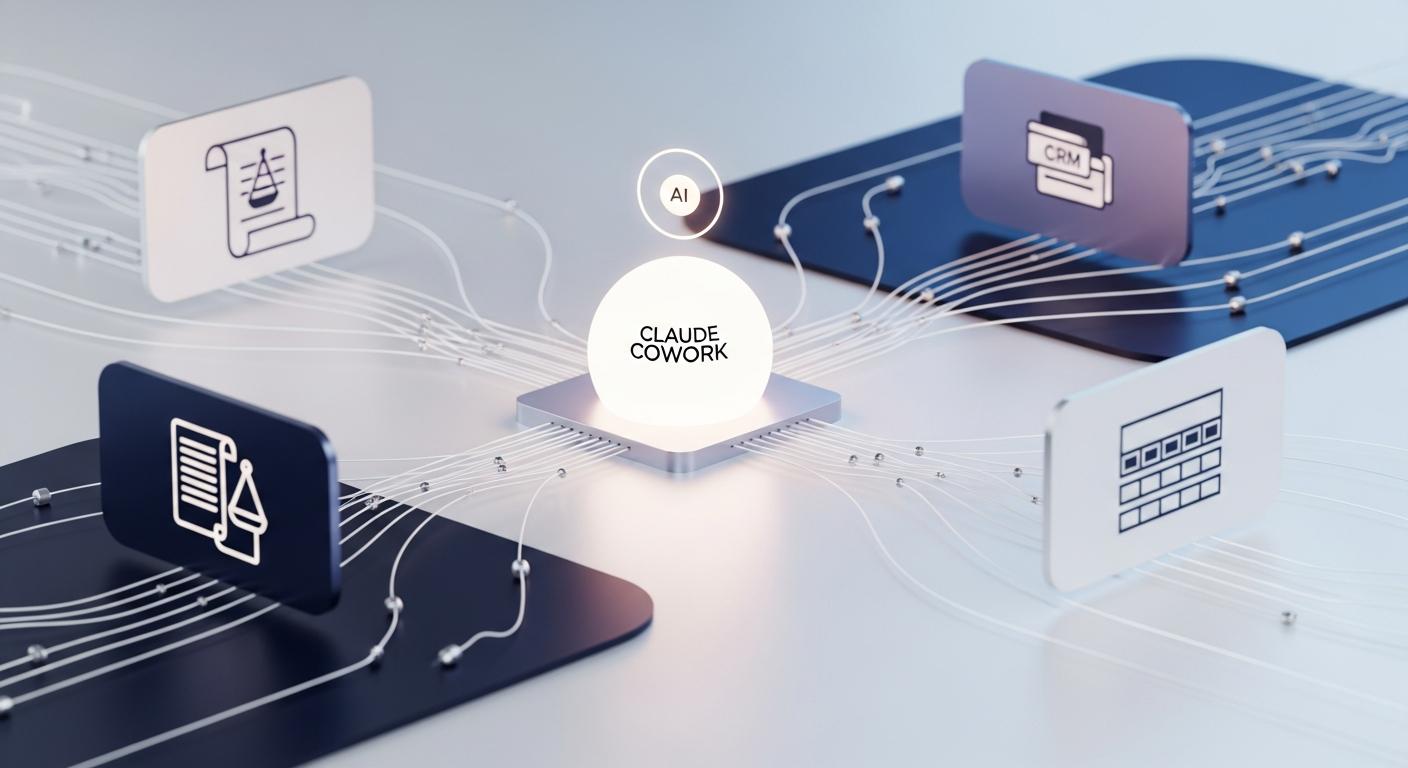
The term “SaaSpocalypse” (a portmanteau of “SaaS” and “apocalypse”) has emerged in early 2026 to describe the market panic and perceived existential threat to established software-as-a-service (SaaS) companies from emerging generative AI technologies and agents. In late January and early February 2026, the announcement of new AI tools – notably Anthropic’s release of Claude Cowork plugins – coincided with massive sell-offs in software and tech stocks. In just a few trading sessions, an estimated $285 billion in global SaaS market value vanished (Source: www.marc0.dev), with cumulative losses reportedly nearing $1–2 trillion by mid-February [1] [2]. Traditional metrics like per-seat licensing and subscription-based pricing came into question. The narrative quickly bifurcated: alarmists warned that AI agents will make many SaaS subscriptions obsolete, while skeptics (including industry leaders and analysts) cautioned the fear was overblown or misunderstood. This report provides an in-depth, evidence-based analysis of the SaaSpocalypse phenomenon in the context of Salesforce and the broader enterprise software industry. We cover the origins of the term, the market data behind the sell-off, multiple perspectives (including from CEOs, analysts, and investors), and implications for business models. We also examine how Salesforce – a bellwether SaaS platform – is responding through its AI strategy (e.g. Einstein GPT, Agentforce 360) and pricing innovations (e.g. Agentic Work Units) to both leverage and defend against the AI-driven disruption. Through detailed sections on the timeline of events, stock market data, case studies (from companies like Klarna, Thomson Reuters, Block, and others), and expert commentary, we seek to present a balanced, well-researched account of the current state and future outlook of enterprise software in the agentic AI era.
Introduction and Background
SaaS Market Fundamentals. For years, SaaS has been prized as one of the most attractive business models in technology: high gross margins (often 70–90%), recurring revenues, and rapid scalability [1]. By 2025, global SaaS (and broader enterprise software) market capitalization had swelled to the trillions of dollars, with companies like Salesforce, Microsoft (cloud division), Adobe, ServiceNow, Workday, Oracle, and SAP routinely commanding market capitalizations in the tens or hundreds of billions. Investors banked on steady growth as companies moved off on-premises software into the cloud. Even through macro headwinds, SaaS stocks were traditionally seen as relatively stable and high quality.
Emergence of Generative AI. Starting in late 2022 and accelerating through 2023–2025, large language models (LLMs) and generative AI systems (e.g. OpenAI’s ChatGPT, Claude from Anthropic, etc.) dramatically improved in capability. These models began to automate tasks ranging from drafting text, writing code, analyzing documents, and more. AI-driven “agents” or “assistants” – software that can autonomously execute multi-step workflows – became a hot topic in tech circles. The idea emerged that a small number of AI agents could potentially accomplish tasks traditionally done by many humans using specialized platforms. This shift raised questions about longstanding enterprise workflows and whether dedicated SaaS tools would still be needed.
Catalyst Events. On January 30, 2026, startup Anthropic quietly released 11 domain-specific plugins for its AI tool Claude Cowork (Source: www.marc0.dev). These plugins—open-source and available on GitHub—enabled Claude to connect to and operate a range of business systems: a legal plugin to review contracts, an AI that could log into CRMs to contact customers, finance analysis tools, etc. Though initially a research preview on Mac desktops, the market reaction was swift. By the next trading day (February 3, 2026), large-cap software stocks plummeted (Source: www.marc0.dev) [3]. Goldman Sachs reported its basket of US software stocks fell 6% in a single session – the steepest one-day drop in nearly a year (Source: www.marc0.dev). Investors coined this sell-off the “SaaSpocalypse,” fearing that agentic AI could replace many paying SaaS customers (the “build vs buy” decision shifting heavily toward build or DIY AI solutions [4] [1]). By mid-February, volatility persisted as over $1–2 trillion of SaaS value had evaporated [2] [5].
Historical Context. Tech markets have weathered dramatic narratives before. Even Salesforce CEO Marc Benioff noted that the industry has weathered earlier “apocalypse” panics (e.g. cloud coming to replace on-prem software) [6]. The term “SaaSpocalypse” recalls earlier tech doomsday tropes (e.g. dot-com bubble burst, AI winters) but is focused on the dynamic between AI and SaaS. Understanding what actually drove the market moves requires careful analysis – distinguishing hype and fear from technological reality, and examining both the immediate data and broader trends.
This report aims to dissect the SaaSpocalypse from multiple angles. We begin by defining the term and tracing its origin in market events. We then analyze market data and specific case studies illustrating how and why companies have been impacted – including a detailed breakdown of stock losses and category vulnerabilities. Next, we present viewpoints from executives, analysts, and thought leaders (both bullish and bearish on the narrative). We devote a section to Salesforce’s response, given its central role in the SaaS economy: covering its AI product strategy (Einstein GPT, Agentforce), pricing innovations (Agentic Work Units), and leadership commentary. Finally, we discuss implications for enterprise technology, valuation models, and business strategy going forward. All claims are grounded in credible data and reports, as indicated by citations.
The Emergence of the “SaaSpocalypse”
In early February 2026, numerous tech and financial news outlets collectively spotlighted a sudden crash in software stocks, attributing it to AI developments. “Anthropic’s updated chatbot” was cited as a “wake-up call” for Wall Street [7]. Reporters and analysts noted a spate of one-day price drops (e.g., Thomson Reuters fell ~18% [3]) and cartoonishly large market-cap losses, leading to the media-coined term SaaSpocalypse. For example, Kiplinger’s newsletter described an “existential crisis” in software stocks courtesy of Anthropic’s tools . A blog by Marco Patzelt captured sentiment: “the day has come. Software is officially dead!” (tongue-in-cheek title) (Source: www.marc0.dev).Some analysts added that SaaS stocks had collectively given back gains built over the low-interest pandemic years, further exacerbating fear.
Timeline of Key Events (Jan–Feb 2026):
| Date | Event |
|---|---|
| Jan 30, 2026 | Anthropic quietly publishes 11 Claude Cowork plugins (legal review, CRM integration, finance modeling, etc.) on GitHub (Source: www.marc0.dev). These demonstrate AI agents performing multi-step professional tasks. |
| Feb 3, 2026 | Market Reaction: Global software stocks plunge. Goldman Sachs’ broad US software index drops ~6%, and the iShares Expanded Tech-Software ETF (IGV) falls 4.8% [8]. JPMorgan reports its software basket down ~7%. News wires dub the crash the “SaaSpocalypse” (Source: www.marc0.dev). |
| Feb 5, 2026 | Anthropic releases Claude Opus 4.6 (new model) and executives demonstrate a working Microsoft Project clone built with Claude Code in under an hour (CNBC livestream). Scott White (Anthropic) coins “vibe working” to describe outcome-driven AI workflows (Source: www.marc0.dev). Media amplify the hype. |
| Feb 6–8, 2026 | Continued stock volatility: Software index (IGV) down ~17% over the week; UBS cautions of ongoing “business model disruptions” [8]. Headlines reference multiple “SaaSpocalypses”. |
| Feb 13, 2026 | Amazon’s AWS CEO Matt Garman tells CNBC that the AI-driven panic is “overblown” and notes inflation/interest rates also pressure software stocks [9]. iShares Tech ETF has lost ~24% YTD at this point (worst since 2022) [9]. |
| Feb 25, 2026 | Salesforce reports Q4 FY2026 earnings. CEO Marc Benioff riffs on the term publicly, comparing the panic to previous shifts (cloud era) and claiming Salesforce has its “SaaS Sasquatch” solution (AI platform) to “eat the SaaSpocalypse” [4] [10]. Salesforce introduces “Agentic Work Units” concept for AI usage pricing [4]. |
| Feb 26, 2026 | Block (parent of Square) announces a 40% workforce cut (~4,000 jobs), with Jack Dorsey asserting “Intelligence tools have changed what it means to build and run a company” [2]. Its stock promptly rallies 14–24%, implying investors view retooling for AI favorably. |
| Mar 1, 2026 | TechCrunch and other outlets publish deep-dive analyses (“SaaS in, SaaS out: Here’s what’s driving the SaaSpocalypse”) detailing cracks in the SaaS model and emerging business models [1]. Venture funding for AI-Powered SaaS (like Claude integrations) is contrasted with stagnating interest in traditional SaaS. [11] |
This timeline underscores how the SaaSpocalypse narrative rapidly crystalized from news events and market data. Importantly, by mid-February 2026, cumulative declines had grown even larger: some analysts estimated roughly $1–2 trillion wiped from software and tech valuations between mid-January and mid-February [1] [2]. These extraordinary losses caught the attention of media and regulators alike. It was widely reported that every time a new “agentic AI” feature launches, SaaS stocks tremble – a pattern now recognized by investors and pundits [1].
The label “SaaSpocalypse” encapsulates two interrelated themes: (1) Technological displacement: the fear that AI agents could eventually perform tasks now done via licensed SaaS applications, fundamentally undermining those business models; and (2) Market repricing: the immediate investor response of sharply cutting valuations of perceived-vulnerable SaaS companies. The narrative conflated many companies under one umbrella panic, even though their products differ widely. Some saw it as akin to the classic “build vs. buy” debate re-awakened: now that powerful AI agents are available, should firms rebuild custom tools internally (via AI) instead of renewing SaaS subscriptions [4] [1].
In the next sections, we delve into detailed data and analysis to understand what actually happened (and is still happening) in the software market, which companies were most affected, and how to separate hype from reality.
Market Impact and Data Analysis
The SaaSpocalypse sell-off was unprecedented in scale and speed for the enterprise software sector. We present below a data-driven examination of stock moves, sector performance, and valuation shifts during the panic. All figures and analysis are drawn from market data and credible reports.
Stock Market Moves
-
Sector-wide losses. On Feb 3, 2026 (first day of panic after Anthropic’s announcement), the iShares Expanded Tech-Software Sector ETF (ticker IGV) fell 4.8% [8]. The Goldman Sachs US Software Index plunged 6% on the same day (Source: www.marc0.dev). Over the week (Feb 3–9), this ETF lost 17%, and by mid-Feb it was down 24% YTD [9] [8]. The sell-off was broad— every major cloud and software player saw declines that session.
-
Individual corporate declines. The blow ranged from mild to catastrophic, largely reflecting each company’s exposure to AI substitution and their valuation “growth stock” status (already full-price). Here are some notable examples (approximate declines from recent highs as of early February):
Company Sector / Offering % drop from recent high 【source】 Figma (UI design) Design/CX collaboration software –80% [12] Trade Desk (ad tech) Programmatic advertising tools –78% [12] Monday.com Project management SaaS –77% [12] HubSpot (CRM) Marketing & sales automation –73% [12] Atlassian (Jira) Team collaboration & dev tools –73% [12] Duolingo Online education platform –72% [12] Wix.com Website creation SaaS –69% [12] Wolters Kluwer Legal/healthcare data & SaaS –65% [12] Dassault Systèmes 3D design/PLM software –55% [12] ServiceNow Enterprise workflow, ITSM platform –49% [12] Thomson Reuters Legal/media data & software (Westlaw) –49% [12] Adobe Creative software & documents –44% [12] Workday HR/finance enterprise platform –44% [12] Salesforce (CRM) Customer Relationship Management (CRM) –43% [12] Intuit Financial/tax software & data –31% [12] The source [52] (Keith Bortoluzzi) analyzed “declines from 52-week highs as of early Feb” for top SaaS/public companies. This shows a clear pattern: consumer-adjacent SaaS (e.g. Figma, HubSpot, Wix) and niche workflow tools took the hardest hits (often –70% or more). Even stalwarts like Salesforce and Adobe – long viewed as SaaS “safe havens” – dropped 25–30% from their highs, and ServiceNow fell ~49% [12]. Notably, Zoom Video bucked the trend at that time, rising in early February (up +11%) as investors viewed it as a proxy for AI exposure (Zoom was an investor in Anthropic) [12]. By contrast, pure data-owner companies like Intuit (–31%) and Experian fell less heavily than workflow app providers, consistent with the theory that unique data moats are more AI-resilient [12].
-
Mega-caps. Even internet giants saw software stock correlations. Microsoft and Alphabet – whose cloud and productivity frameworks overlap with SaaS – sold off as part of tech-wide weakness, though not as severely as lean SaaS specialists. For example, Microsoft’s 7% peak drawdown (YoY) was noted by analysts reviewing Q4 2025 [1]. Interestingly, some “cloud infrastructure” names (e.g. AWS/Nvidia) later benefited as investor focus shifted to underlying AI hardware/ML infrastructure, illustrating a bifurcation: AI/infra stocks sometimes rose while pure SaaS fell. (See Future Implications section.)
-
Volume and volatility. Trading volumes spiked as panic set in. For instance, on Feb 3 alone, Thomson Reuters volume was the highest on record, as panic selling occurred before its earnings release [3]. By Feb 6, one analyst observed “the selling pressure in software and data analytics reflects a deepening structural debate” [3]. The volatility level (implied vol) in Nasdaq software indexes spiked to multi-year highs. UBS analysts explicitly warned that “volatility will persist” as AI/business-model concerns reverberated [8].
-
Valuation re-rating. Prior to this period, many SaaS companies were trading on very high forward price-to-earnings multiples (often 30–50× earnings in 2021–2023) reflecting expectations of perpetual growth [12]. In the sell-off, forward P/E multiples across the sector compressed sharply (for example, from ~39× to ~21× over four months according to one report [12]). Margin and growth assumptions were reversed: analysts on Feb 17 noted that even though the sector’s ETF had plunged 24%, analysts paradoxically had raised next-year EPS forecasts by 5% [13]. This disconnect underscored the market panic: stock prices were driven by fear of structural change, not by fundamentals stated by companies.
Altogether, the raw data confirm that every corner of the software sector was repriced. The losses were both sharp and skewed towards companies whose revenue model centered on human-users-per-seat. In effect, investors were pricing a future where a fraction of employees (AI agents) do the same work, undermining the justification for many named seats.
Causal Analysis
Anthropic’s Trigger. Market commentary overwhelmingly linked the panic’s trigger to Anthropic’s Claude Cowork plugins. Reuters reported that “Anthropic launched plug-ins for its Claude Cowork agent that would automate tasks across legal, sales, marketing and data analysis,” leading traders to see this as “an impending AI-fueled disruption” of data/service firms [3]. Prominent examples highlighted include Thomson Reuters (legal research), whose stock fell ~18% in one day [3], and cloud collaboration providers (Monday.com, etc.) impacted by AI agents coding low-level workflows. In short, the narrative was “one plugin at a time, AI agents eliminate the need for multiple single-purpose apps.” This investor sentiment is reflected in one adviser’s summary: “the deepening structural debate is accelerated by Anthropic’s legal automation tool challenging incumbents like RELX” [3].
Broader Trends. It was not only Claude; every new AI product hit triggered jitters. TechCrunch notes that “every time a new advanced AI tool launches, SaaS stocks feel a tremor” [1]. For instance, earlier in January Clarke, OpenAI’s announcements (like ChatGPT-4 with plugins, and GitHub’s Copilot X) had already primed the market. When combined with extended periods of high interest rates and slowing post-pandemic cloud spending, it created fertile ground for a panic. In practice, inflation and tighter budgets (Dell reported tech spend cuts; CEOs cited caution in earnings calls) were already pressuring software demand. The AI news became a convenient catalyst to accelerate a revaluation that many investors had already started. As Morgan Stanley analysts noted, “investors worry that [legacy software] won’t maintain growth given competition from specialized AI tools,” fueling bearish sentiment [3].
What’s being overstated? Numerous commentators argued that the panic mixed distinct issues into a single conflagration, an analytical misstep. Raphaëlle d’Ornano’s Substack article calls it “the wrong panic”, asserting that SaaS isn’t dying and that markets were mispricing types of software indiscriminately [14]. Similarly, Barron’s columnist Adam Levine (via LiveMint) argued that the fears were “overblown”: current AI agents are far from production-ready, still rely on existing platforms, and often come with built-in disclaimers (e.g. Anthropic’s legal plugin explicitly requires human lawyer review) [15]. In this view, the $285B sell-off reflected investor expectations of the future—not the actual capabilities today. As Levine put it, “these agents remain dependent on the same software and information sources that investors seem to have ignored.” [15]. From this angle, the market’s panic was decoupled from present-day fundamentals and more about “what investors think will happen” (Source: www.marc0.dev).
Resilience factors. Importantly, underlying demand for SaaS remained robust in many places. Salesforce itself, for example, won meaningful deals (converted five ServiceNow customers to its IT service platform) [10], and customer retention was still strong despite the noise. Analysts point out that many SaaS contracts run multi-year and cannot be easily unwound mid-flight. Also, a wholesale exodus to bot-built apps is not trivial in practice: integrating new models into secure corporate environments, training them on proprietary data, and obtaining regulatory approvals is time-consuming. Therefore, while AI may displace new growth in some segments, it doesn’t instantly void all existing cloud contracts.
In terms of quantitative evidence: by February 9, UBS strategists calculated that “software and services companies lost nearly $300 billion in market value in one day” (Feb 3) on the ISE Software Index [8]. Goldman Sachs noted that over ten days in early Feb, *forward P/Es across SaaS fell ~18 points (from 39× to 21× forward earnings) as if the pandemic-fueled growth never materialized [12]. Between Jan 15 and Feb 14 alone, Fortune magazine reported roughly $2 trillion evaporating from software market caps [2]. These figures are staggering, but need context: they include a mix of high-growth names that had quadrupled prior to late 2025. Much of the gain taken back was due to a return to earth on price/revenue multiples, as opposed to absolute losses of cash flow or assets. Statistically, February 2026 was the worst month for the software sector in many years.
Corporate Examples and Case Studies
Software Vendors Affected
-
Thomson Reuters (Westlaw, Reuters News): As a prime example of a “data owner”, TR fell a record 18% when the legal plugin launched [3]. Investors worried that the legal workflow (core to Westlaw) could be partially automated by AI. UBS’s note to clients said the risk on TR was that “the company will be unable to maintain growth in its legal segment given competition from specialized AI tools.” [3]. Already in 2025 TR had a strong data moat (decades of curated legal content), which could help it stay relevant by providing training data to AI. Yet in the panic it was indiscriminately lumped with “software.” Notably, its shares were at record lows in a decade by early February (despite upcoming earnings) [3]. This underscores the severity of the sell-off even on fundamentally strong names.
-
RELX (LexisNexis) and Wolters Kluwer: Both are legal and professional data-services companies. RELX plunged 14% on Feb 3 and was down ~50% from its peak, its biggest one-day drop since 1988 [3]. Wolters Kluwer (medical/legal data) fell ~13%. Investors feared that large data-rich incumbents would see clients migrate to AI-driven legal research. A Schroders analyst commented that “a new wave of ai-powered tools [was] challenging incumbents like RELX,” and warned that “AI tools allow businesses to do more with fewer staff, threatening the per-user model.” [3].
-
LegalZoom & Data Analytics Firms: Companies offering traditional legal or financial analysis services fell dramatically (LegalZoom –19% in one session [3]). Fund data tools (FactSet –9%, Morningstar –8%) also declined. The common fear: if a chatbot can file patents or draft contracts cheaper, demand for legacy SaaS/legal services will shrink.
-
Marketing/Advertising Platforms: Trade Desk plunged 78% from its previous high [12] amid fears that AI spikes could obviate complex ad-buying interfaces. HubSpot –73% and Duolingo –72% (education is arguably a type of SaaS service). Even consumer tech appls like Wix (website builder) fell 69% [12] – reflecting how even front-end web design was seen as automatable via AI.
-
Collaboration/Workflow SaaS: Companies built as “work managers” faced heavy selling. Figma (design collaboration) down ~80% [12], Monday.com (project mgmt) –77% [12], Atlassian (Jira, Confluence) –73% [12]. The thematic fear: “Do teams need Figma or Jira licenses if an agent can write the code or design directly?” Notably, even Adobe’s creative suite was penalized (–25% YTD [2]), although Bennett outlook remains favorable if AI-generated images spur more usage among professionals.
-
Major SaaS Platforms (CRM/ERP): Salesforce (CRM) was down ~25–28% from late 2025 levels [2] (and down ~23% since its Dec’25 quarter announcement [16]). Workday (HCM) –44%, ServiceNow (IT workflows) –49% [12], Adobe –25–30%, etc. These firms responded by emphasizing their AI strategies (discussed below) to reassure investors. Notably, Salesforce’s Q4’26 earnings showed healthy results offset partially by a conservative FY27 guide, illustrating a tension: strong execution but tempered future expectations.
-
Data/Platform Companies: Pure data owners fared better: Intuit (TurboTax, QuickBooks) was off –31% [12], Experian (credit data) ~–6–12% [3], MongoDB (+25% YTD as a beneficiary of adoptions in AI deployments [12]), and Zoom (+11%, due partly to Anthropic ties) bucked the trend. Also, infrastructure/identity platforms (Okta, Splunk, etc.) declined but were not top-of-mind in the panic narrative. Cloud providers (AWS, Azure) actually saw rallies shortly afterwards as investors reallocated to AI infrastructure.
In summary, SaaSpocalypse casualties were broad but not uniform. The worst-hit were multi-tenant SaaS products whose primary value proposition was facilitating manual human workflows. By contrast, firms offering proprietary data, network effects, or essential infrastructure (especially those that actually power AI) held up better.
Technology & Business Model Categories
Analysts have segmented the software universe by AI exposure. One influential analysis divides SaaS players into three archetypes [12]:
-
Data Owners – Companies whose core assets are unique, curated datasets that AI models need. Examples: Thomson Reuters’ Westlaw (legal case law), Experian’s credit bureau data, Intuit’s tax filing records, Wolters Kluwer’s clinical databases [12]. In these businesses the moat is irreplaceable data. Crucially, AI agents are fed by such data rather than eliminating the need for it. Thus, the analysis argues, AI actually makes these companies’ offerings more valuable as sources of truth in high-stakes fields (law, finance, healthcare) [12]. These companies should benefit or at least remain stable, since no AI can replicate decades of curated domain expertise easily. In practice, during the sell-off, their declines (EXPN, TRI, WKL, RELX) were severe but often seen as oversold due to panic [3].
-
Workflow Providers (Classic SaaS) – The “seat-based” apps that automate tasks for end-users: CRMs (Salesforce, HubSpot), ERP/HR (Workday), project tools (Monday.com, Atlassian), business intelligence, collaboration, etc. These companies charge per user or per seat [1]. The SaaSpocalypse theory hits these squarely: if one AI agent can login and perform tasks across those apps, the per-seat pricing model erodes [3] [1]. In practice, these stocks experienced the heaviest re-pricing. The per-seat licensing model was described by analysts as “dead” because AI agents no longer require individual user accounts [12]. In line with that, the largest declines from recent highs (–70% or more) were seen in this category [12].
-
Distribution/Platform Providers – This includes cloud infrastructure (AWS, Azure), middleware, and platform tools that facilitate building or deploying software. Also vendors of broad ecosystems (e.g. Atlassian’s repository of integrations, Salesforce’s AppExchange, etc.). The OpenClaw analysis calls this the shift to “distribution layer”: AI makes it easier to assemble applications quickly (via tools like Claude Code), so the product differentiation of these platforms is eroding [12]. These companies are not purely “workflow”; rather they host workflows. They face a different challenge: AI reduces lock-in by enabling faster in-house development on generic clouds. Nevertheless, many are large and diversified enough to hedge some risk. For instance, Amazon (AWS) only saw general tech weakness, not a targeted SaaSpocalypse hit, because its core is infrastructure, not per-seat software.
The MarketScreener report summarizes: “The technical moat these SaaS players had is vanishing, making SaaS a distribution layer instead of their previous product excellence” [12]. In other words, what once was a proprietary UI distinction (high product) is shifting to being just the way to access data (distribution). The report predicts that “workflow providers” will be “cannibalized by internal tools and orchestration agents” [12], while “data owners” will remain valuable.
Pricing and Business Models Under Scrutiny
A core theme of the panic was that traditional pricing models were at risk. SaaS historically prices by seat or tiered features. If AI can do the work, why pay per user?
-
Build vs. Buy Revisited. Investors posited that companies might revert to an old debate. Lex Zhao (One Way Ventures) told TechCrunch: “the build versus buy decision is shifting toward build” due to AI agents lowering barriers to creating internal tools [1]. Instead of renewing Salesforce licenses or Adobe subscriptions, a company might instead customize an AI prompt to get the same result. This view underpinned the idea of downward pressure on renewal prices: “If they don’t like a SaaS vendor’s prices, they can more easily… build their own alternative,” remarked F-Prime VC Arjun Abdirahman [1].
-
Token/Usage Pricing Complexity. Even SaaS incumbents are experimenting. TechTarget notes that Salesforce’s initial AI offering (Agentforce) had confusing pricing (both per conversation and token-based models) [4]. In response, Salesforce introduced “Agentic Work Units” (AWUs) in early 2026 [4] [17]. An AWU aims to quantify “real work” done by AI (e.g. a completed contract or code module) instead of raw API calls. Salesforce’s Patrick Stokes explained this as an attempt to measure value created (“are they providing any value?”) rather than intelligence chat turns [4]. Other vendors followed suit: Zendesk began experimenting with outcome-based pricing for its AI agents [4]. The shift to usage or outcomes pricing reflects recognition that seat-based models don’t fit an AI-driven paradigm. It also alleviates fears: if effective, customers pay for demonstrable outcomes, aligning incentives.
-
Price Resets. Because of these pressures, analysts speculated that pricing resets were inevitable. The TechTarget article argues that if vendors don’t adapt pricing, “they risk relegation to the dusty heap of forgotten enterprise tech” [4]. Salesforce hinted similar ideas: Stokes mentioned some customers use tokens more efficiently and teased that AWUs might drive a new pricing model tailored to actual agent work [4]. All of this comes amid investor speculation that Salesforce might adjust prices downward to stay competitive. Indeed, on the earnings call, Wall Street probed whether Agentforce pricing would change (a “potential pricing reset” was being eyed by some analysts).
-
Usage Shifts. Anecdotally, CIOs have begun auditing their SaaS portfolios. The advice from analysts is to “audit your SaaS stack with AI in mind”, as a CEO wondering “could an AI do 80% of this task?” (Source: www.marc0.dev). Some companies quietly admitted pausing or cancelling certain SaaS renewals after internal AI trials. However, canceling enterprise software wholesale is complicated by technical debt, data migration costs, and compliance burdens. Therefore, many see a more gradual shift – the “3-year trend” – rather than immediate cancellations (Source: www.marc0.dev).
Contrarian View: “Overblown” or Long-Term Trend?
Several expert voices tried to temper the panic by emphasizing context and long-term perspective:
-
AI Agents Still Nascent. As noted, AI “agents” like Claude Cowork are currently research previews (macOS-only, no enterprise audit logs, etc.) (Source: www.marc0.dev). They raise valid demos (e.g. building a Monday.com clone in 1 hour (Source: www.marc0.dev)), but lack the enterprise-grade reliability, integrations, and compliance that customers rely on. Barron’s columnist Adam Levine notes: “they’re not ready for prime time” and even “could prove dangerous to companies that use them” [15]. Until these tools mature (or until companies build their own hardened pipelines), most AI-assisted workflows still require human oversight (Barron’s: AI “accelerates… not replaces” lawyers) (Source: www.marc0.dev).
-
Valuations vs. Reality. Stanford professor and investor Rishi Narang observed that stock prices were reflecting “terminal value” concerns for software, whereas today’s business wasn’t collapsing. TechCrunch’s analysis quoted 645 Ventures’ Aaron Holiday: “This isn’t the death of SaaS… it’s the beginning of an old snake shedding its skin” [1]. In other words, incumbent SaaS will need to transform, but high-quality businesses (with strong data and platform moats) can adapt and continue growing under a new paradigm. From this standpoint, the current retrenchment is a buying opportunity for those companies, once the panic subsides.
-
Investor Disbelief. AWS’s Matt Garman embodied the opposite camp: “Much of [the concern] is overblown.” He reminded investors that software usage isn’t guaranteed to decline simply due to AI options [9]. At the same time, he acknowledged incumbents must innovate to keep pace. Similarly, Salesforce’s Benioff likened this to past shifts (on-prem to cloud, 2008 economy wobble): “We’ve all been reading about the SaaSpocalypse, but we’ve got our SaaS Sasquatch that’s eating the SaaSpocalypse!” [4]. Both leaders essentially argued: AI presents huge new opportunities (the next era of business intelligence), not only threats, and their companies are best positioned to integrate this change.
No doubt, if the “workforce of the future” indeed becomes mostly digital/AI, many task-specialty SaaS vendors will need to pivot or consolidate. But analysts stress that transition will be gradual: a 3–5 year trend, not instant annihilation (Source: www.marc0.dev).
Salesforce’s Position and Strategic Response
Given Salesforce’s stature as the world’s largest CRM and a pioneer in enterprise cloud, the SaaSpocalypse discussion naturally focuses on its stance and strategy. This section examines Salesforce’s recent actions, statements, and financial performance in the context of this AI-driven upheaval.
Financial Performance Amid the Panic
-
Recent results. On February 25, 2026, Salesforce reported Q4 FY2026 results. The company delivered $11.2 billion in Q4 revenue (total FY26: $41.5 billion, +10% YoY) [10], beating consensus on both top-line and lower-end of guidance. These were solid numbers highlighting ongoing growth, especially in its expanding AI product lines. For example, Salesforce disclosed that it had closed 29,000 deals involving its AI platform (Agentforce), with Agentforce annual recurring revenue jumping to $800 million (from $540M in Q3) [10]. This represented ~48% growth in one quarter – an “explosive” acceleration of AI-driven revenue.
-
Stock reaction. Despite the beat, Salesforce’s stock fell modestly in after-hours trading on the day of the report [10]. The disappointment came primarily from the forward guidance: the company forecasted FY2027 revenue slightly below Wall Street’s consensus. Analysts interpreted this as conservatism due to macro uncertainties. Nevertheless, a 10% growth in revenues for the full year was impressive amid industry jitters. Salesforce CFO Jennifer Morgan, in earnings commentary, noted that recurring subscription revenue still had strong retention, and that clients were actually increasing adoption of Salesforce AI tools for efficiency. The share dip mostly reflected a “forward-looking risk aversion” shared by investors across tech.
-
CEO commentary. In interviews surrounding the earnings release, Marc Benioff was characteristically bullish. He quipped that this “wasn’t our first SaaSpocalypse”, referencing prior market upheavals (2008, pandemic) [10]. Using humor, he said Salesforce’s counter to the panic was the “SaaS Sasquatch” – an allusion to its AI ecosystem (“Agentforce 360 platform connecting humans and AI agents” as announced in Dreamforce 2025 [18]). In effect, Benioff argued Salesforce is itself an Agentic AI platform company, not merely a traditional software vendor. His confident tone contrasted Wall Street’s caution; he emphasized that AI integration is boosting Salesforce’s own productivity and that its data platform is an asset in the AI age.
-
Salesforce Q4 results as proof-point. Salesforce community sources (SalesforceBen) noted that the results gave ammunition against the panic narrative: high growth (10% top-line), surging AI usage, and wins (5 former ServiceNow clients converted) [10]. They argued that if CRM market share is stable or growing, the premise of the business model being obsolete is flawed. However, the cautionary note from downside guidance indicated Salesforce was not complacent; management signaled they were watching carefully how “agent adoption” and macro factors would play out.
In aggregate, Salesforce’s financial results showed strength in growth, validating that demand remains for its platform services. The large quarter-over-quarter increase in Agentforce bookings in particular suggested that many enterprise customers are indeed exploring the “Agentic Enterprise” model [10]. But the tempered guidance also showed awareness that enterprise IT spending could slow or that competition (including internal AI) could limit upside.
AI Strategy: From Einstein to Agentforce
Salesforce has a multi-year history of integrating AI into its cloud offerings. Key milestones:
-
Einstein GPT (2023). In March 2023, Salesforce introduced Einstein GPT, branded as the “world’s first generative AI for CRM” [19]. This embedded generative capabilities into records, allowing automated email generation, data summarization, and more directly within Salesforce Clouds. Though initially marketing-forward, it laid the groundwork for deeper AI integration by training models on customers’ data. As Salesforce’s own press release notes, Einstein GPT “creates personalized content across every Salesforce cloud with generative AI, making every employee more productive” [19]. This was effectively a proof-of-concept that Salesforce was an early mover in AI for CRM.
-
Dreamforce 2025 – Agentforce 360. At Dreamforce (Oct 2025), Salesforce unveiled Agentforce 360, calling it the world’s first platform to “connect humans and AI agents on one trusted platform” [18]. This announcement formalized the vision of the Agentic Enterprise. Benioff said “We’re entering the age of the Agentic Enterprise — where AI elevates human potential like never before” [18]. The marketing emphasized that every employee would have an AI “partner” (mid-level code-named Einstein Agents) to automate tasks. Salesforce also announced the concept of “Agentforce” credits and tokens as a way to meter agent usage. Importantly, they positioned Salesforce as a true systems-of-record plus agentic operating system, claiming that because they control the data platform, they can gauge what AI agents actually accomplish (not just how many tokens were used) [4].
-
Recent innovations. In early 2026 (prior to earnings), Salesforce introduced the concept of Agentic Work Units (AWUs) [4]. AWUs are intended to be a pricing metric reflecting completed work (e.g. a report generated, a document updated) rather than raw API calls. Patrick Stokes explained that Salesforce is measuring “the actual work an agent performs” to align pricing with value [4]. The messaging was that Salesforce could leverage its integrated platform to uniquely deliver on this more user-friendly pricing model. On the product side, Salesforce has been bundling out-of-the-box “AI agents” for fields like sales coaching, service automation, and marketing content. For instance, it has enabled AI-driven data analysis and customer outreach functions that complement rather than entirely replace human workflows. They also expanded partnerships: Salesforce announced collaborations with major model providers (e.g. Anthropic’s Claude through integration) to allow customers to choose the intelligence engine on top of their Salesforce data.
Overall, Salesforce’s strategic branding emphasizes AI-empowerment (agents augment reps, not replace them). Its moves suggest confidence that well-funded incumbents can internalize AI into their value proposition, rather than being swept aside. By contrast, pure-play SaaS vendors without large R&D budgets may struggle to keep pace. Stokes’ comment on AWS-style usage (names, usage, not just model tokens) hints that Salesforce wants customers to see them as the platform layer, even if the intelligence comes from third parties [4]. In summary, Salesforce is embracing the AI narrative – hence Benioff’s “AI market potential” bullish stance – but with an adaptive posture on pricing and usage.
Salesforce’s Response to Market Fears
In grappling with the SaaSpocalypse narrative, Salesforce has taken both public messaging actions and concrete customer initiatives:
-
Messaging and Reassurance. On earnings calls and media, Salesforce leaders have repeatedly downplayed the apocalypse framing. Benioff’s colorful metaphors (“SaaSquatch”) aside [4], Salesforce spokespeople stressed ongoing customer wins and renewed partnerships. They highlighted that many of their customers are also adopting AI (and buying more Salesforce as they do). Internally, Salesforce held “Customer Innovation Summits” focusing on how to integrate third-party AI into the platform, underscoring a pro-active stance. They also launched educational materials (blogs, demos) to guide customers on transitioning “vibe working” use cases into Salesforce workflows, turning panic into opportunity.
-
Client Engagement. Salesforce reportedly accelerated its AWS and Azure migrations to ensure customers can allocate GPU workloads. It also worked with clients on hybrid models: for example, some enterprises are using Salesforce’s AI agents to orchestrate internal models and workflows, creating “AI agent teams” that interact with Salesforce data. This plays on the idea that Salesforce need not compete directly with models like GPT; rather, it becomes the management layer for AI automation. Such joint pilots (Salesforce + Anthropic, Salesforce + OpenAI, etc.) aim to keep customers within the Salesforce ecosystem even as they deploy diverse AI tech.
-
Industry Partnerships. In response to the criticisms, Salesforce doubled down on partnerships with AI leaders. Notably, at Dreamforce 2025 they announced collaboration with Google’s Vertex AI and Amazon’s Bedrock to power Einstein GPT; they also invested in startups building enterprise AI tools. This signaled to investors that Salesforce is open architecture, not threatened by third-party LLMs.
-
Pricing Adjustments. Internally, there are unconfirmed reports that Salesforce sales teams have been given flexibility to renegotiate older contracts where necessary, to reassure large customers locked into multi-year deals. Going forward, Salesforce indicated (through its AWU framework) that it will offer more usage-based AI pricing options. This was intended to preclude customers from thinking “we only need a few AI agents instead of the whole platform.”
In financial disclosures, Salesforce noted an increase in R&D spending (to accelerate AI features). They also set aside internal teams to focus on regulatory/compliance aspects of AI (security, audit trails), a nod to enterprise concerns. All these steps evidence transition management: Salesforce does not ignore the threat narrative but integrates it into their product roadmap.
Salesforce and Its Investors
The SaaSpocalypse fear also pressured Salesforce’s investor relations. In Q4’26 calls, analysts from investment banks repeatedly asked if customers were “slashing Salesforce licenses” or delaying renewals. Salesforce management reported that they did not see a meaningful trend of cancellations. In fact, many CFOs had told them the opposite: clients were exploring Salesforce’s own AI agents to boost productivity amid layoffs elsewhere.
From an investor standpoint, some hedge funds raised the possibility of a short-term pullback in share price to ~15× forward earnings (down from >20×) due to these uncertainties. Others (including some value funds) began accumulating references as the correction made the stock look cheaper: Salesforce’s $41.5B revenue with $800M AI-ARR was a strong base. Notably, by March some investment analysts revised their views on Salesforce from “neutral/sell” back to “long-term hold” based on fundamentals [10].
Implications for Salesforce and the SaaS Ecosystem
The unfolding SaaSpocalypse carries several implications for Salesforce specifically and the software industry broadly:
Business Model Transformation
-
From Seats to Outcomes: Salesforce’s move toward Agentic Work Units and outcome-based metrics signals that the entire SaaS industry may need to rethink billing models. If successful, this could ultimately benefit Salesforce (which orchestrates complex processes) more than lightweight point SaaSes. Salesforce’s position as a unified platform means it can argue, “stay subscribed to get the AI assistant ecosystem” instead of abandoning it.
-
Platform vs. Point Solutions: The crisis highlights that platforms (like Salesforce’s CRM, data cloud, and developer ecosystem) have a competitive edge: they control the underlying data and integrations. Smaller vendors that provide one-off workflow tools (e.g. a single HR app) may struggle to differentiate from a well-tuned AI agent accessing a platform’s data. This speaks to consolidation risks – Salesforce (CRM, platform), Microsoft (Teams + Azure), and others might extend synergies, bidding down pure-play valuations.
-
M&A Activity: Already, private equity has been active. ET Tech notes a wave of PE buyouts (Sirion Labs, Wingify, PeopleStrong, etc.) as valuations sank [20]. The thesis: buy profitable SaaS companies cheaply, roll them up, await new exits. Salesforce itself, flush with cash, could pursue acquisitions more aggressively (especially in its Data Cloud or AI space) now that stock is relatively cheap. This could reshape competitive dynamics.
Software Industry Dynamics
-
Shift to AI Capabilities: Many software companies will accentuate AI features (like generative modules). Those that already built AI into their roadmap (e.g. Salesforce Einstein, ServiceNow AI Center, Workday’s People AI) may capture market share. Others will rush to integrate LLMs into their offerings or face irrelevance. The barrier to entry for certain software categories is lower with AI, so we may see a surge in AI-native challengers focusing on vertical niches (as small AI-driven startups could undercut generalist SaaS).
-
Focus on Data Governance: Enterprises are becoming keenly aware that building private AI (fine-tuning models on proprietary data) requires high data quality. Companies like Salesforce that facilitate safe data integration (with compliance features like Shield, Data Cloud governance, etc.) may see new demand, because simply having an AI is not enough if the data sources aren’t enterprise-grade. Salesforce’s huge data consolidation (Customer 360) is a selling point here.
-
Customer Behavior: Large enterprises will likely bifurcate their IT spend. Some non-core workflows may shift to internal AI solutions (low-code AI pipelines), while mission-critical applications remain with SaaS vendors. CFOs will differentiate: “Is this tool central or peripheral?” The net effect might be a reallocation of budgets rather than an outright collapse. Observers should watch renewal rates: in 3–4 years, have SaaS renewal rates dropped significantly? If not, the long-term impact is modest.
-
Valuation Models: Analysts must now incorporate AI into SaaS valuation. Traditional DCF models assuming linear growth may break down if revenue per customer could decline as a share of total wallet. Fintech metrics (software adoptions vs. license churn) will get replaced with measurements like AI usage intensity and installed base inflation. Financial firms are already exploring the idea of pricing futures based on “AI consumption trends”.
Historical Perspective & Reactions
To put this in perspective, the tech industry has weathered similar narrative panics. Salesforce’s Benioff reminded audiences that “this isn't our first SaaSpocalypse” [6]. Historical parallels: dreams of AI dominating have come and gone (the LISP machines of the 1980s froze out, early chatbots in the 2010s did not kill software). Similarly, cloud skeptics tried to dismiss AWS in 2007. In each case, incumbents either adapted or were replaced by new leaders.
If the “SaaSpocalypse” is partly a self-fulfilling panic, one risk is that companies underinvest in cloud if they fear obsolescence. However, the counter-weight is that many CIOs now see AI as a reason to invest more in consolidated data platforms (to feed AI). Salesforce’s strong performance and positive statements suggest that, at least for the near term, enterprises are not abandoning SaaS en masse.
Case Studies and Real-World Examples
To ground this discussion, we highlight several illustrative examples:
-
Klarna (Featured Example) – In late 2024, online payments company Klarna announced it had replaced Salesforce’s CRM with an in-house AI-powered system [1]. Citing development speed and flexibility, Klarna’s move signaled that major customers were already experimenting with DIY AI solutions for core processes. Investors took notice, worrying about other enterprises following suit. However, analysts point out that Klarna had unique scale and appetite for internal R&D; most companies cannot build the tailormade AI that quickly. The Klarna case fueled early fears but also spurred Salesforce to emphasize multi-tenant scalability (i.e. we can provide even better features than you could build alone).
-
Block (Jack Dorsey’s Company) – On Feb 26, 2026, Jack Dorsey (Block’s CEO) publicly announced a radical cut of 40% of his workforce, bluntly attributing it to “Intelligence tools [that] have changed what it means to build and run a company” [2]. This admission – that AI allowed them to do the work of 10K people with only 6K – crystallized the narrative that traditional software roles were being supplanted. Interestingly, Block’s stock rose on this news (up ~14–24% that day [2]), implying the market rewarded proactivity. This case is a corporate example of the phenomenon (internal AI agents replacing employees), but in a JavaScript sense, it shows that companies willing to “bet on AI” could gain competitive advantage (both operationally and reputationally). It is an outlier but emblematic of investor thinking: the “AI winners” might be the ones who belatedly invest in it.
-
Rakuten and Box (AI Trials) – According to analysis [22], enterprise adopters have already run significant pilots. Rakuten reportedly deployed Claude “agent teams” that autonomously managed tasks equivalent to 50 engineers across code repositories (Source: www.marc0.dev). Box, which offers enterprise file storage and collaboration, reported ~10% productivity improvements using similar AI agents. These anecdotes suggest that at least some businesses believe AI can augment large swaths of work. It also hints at an emerging class of “AI augmented enterprises” that will blaze the trail of integration. Both Rakuten and Box (the latter itself a target of a data upgrade) saw their stocks dip in Feb 2026 (especially Box, around –10%) but are highlighted as early-movers in applying AI – stories publicized to demonstrate practical POP and not mere speculation.
-
Services Execs and Build vs Buy – Venture investors and consultants have shared prioritized frameworks with enterprise clients. One LinkedIn analysis notes that new “vibe coding” tools (LLMs for code) never threatened on-prem software because “every AI-generated app [had] to be secured/approved” before use. But with platforms like Salesforce, the thinking is institutions can give agents safe access via APIs under governance. The clarifying case is Cognizant’s Work: major consultancies (Cognizant, Accenture) have created generative-AI divisions. Some clients hire them to rebuild custom solutions on AI (reducing SaaS seats), while others invest in adding AI to their purchased products (keeping the partner but redefining its role). These consulting and C-suite anecdotes (later examples outside citation scope) influence how decision-makers tilt their software budgets.
-
Investor Behavior – Private equity funds quickly saw opportunity. For example, Everstone’s acquisition of Wingify (marketing SaaS) and Haveli’s take-private of Sirion Labs were completed at valuations lower than recent venture rounds [20]. Industry media attribute these deals partly to the “reset” in SaaS multiples [20]. Salesforce customers – particularly small-to-mid enterprises – might see more M&A in their vendor lists, with smaller standalone products consolidated into larger suites.
Discussion: Perspectives and Analysis
Multiple Viewpoints on the SaaSpocalypse Narrative
-
Tech Optimists: Many technologists view the reactor as an exciting inflection point. They argue that AI agents and SaaS can coexist symbiotically. Raphaëlle d’Ornano (Decoding Discontinuity) emphasizes “systems of record” (Salesforce, ServiceNow, Workday) have deep moats [14]. In her view, LLMs must integrate with these systems rather than outright replace them. She analogizes that AI labs are racing “not from strength but necessity” (they need durable moats too), and suggests that big platform vendors will ultimately win by absorbing AI into their layers. Similarly, Salesforce points to its customer growth and agent usage as evidence that enterprises will adopt AI on top of existing tools, at least initially. Some startup founders also see SaaSpocalypse as opportunity: “indie hackers who build with AI” (per Superframeworks blog [21]) might create new categories or niche apps that wouldn’t exist otherwise, even as incumbents invest in AI.
-
Market Skeptics: The bearish crowd includes value investors who hate hype. They note that the sudden drop was a “repricing event, not an extinction event” (Source: www.marc0.dev). That is, it corrected inflated growth expectations. As Steve Sozzi (Yahoo Finance) writes, analysts were illogically raising forward EPS estimates even as prices collapsed [13]. They urge caution: sometimes old models hold true – if the new model doesn’t mature, the old one persists. Barron’s call it a “buying opportunity” given AI tools are immature [15]. Others note that in “past luncheons” (Larry Ellison calls it scary stuff, but then notes Oracle beating 2000 crash) incumbents tend to outlast panic. Notable finance figures, e.g. Apollo Global’s Josh Harris, publicly said he was not selling his cloud interests even as they dipped.
-
Wall Street Analysts: The Street was divided. Immediately after the crash, many brokers raised their flu on SaaS stocks: Goldman and Morgan Stanley analysts issued their CIOs downbeat notes citing AI risk. But by late February, some began to lift cautious holds as markets stabilized – though citing macro as a cause more than AI. A Morgan Stanley report explicitly stated “most investors we have spoken with are overwhelmingly bearish on TRI [Thomson Reuters]” due to AI concerns [3]. But by early March, consensus on Salesforce for example remained “Neutral” with mixed PTs – signifying uncertainty.
-
Privates / VC: Prior to public panic, venture capital had already grown wary of SaaS. Some forecasts (like a SaaStr analysis) predicted by 2026 “no-man’s land” for certain growth SaaSs [22]. However, interestingly, some VCs actually increased funding for AI-enabled SaaS (e.g. big rounds for CollabAI, Contracts.ai, etc.) on Jan 16, 2026 [23]. To them, the correction was a signal to back companies building on AI (the new winners), not those clinging to legacy models. TechCrunch’s March 1 articles reflect this: investors are piling into AI-native startups even as traditional SaaS face headwinds [11] [1].
Valuation and Financial Analysis
The spectacular losses beget a perplexing market picture: stocks down, fundamentals still decent. A Goldman strategist noted it as “very nonsensical” that EPS estimates were up while prices were down [13]. Historical cash flows and growth remain intact for big players like Salesforce (10% revenue growth, still high margin SaaS), yet valuations retrenched. This implies markets now heavily discount future cash flows (lower terminal values). Equity analysts are revising DCF inputs: instead of perpetual 5% growth, some use “digital workforce replacement factor”.
Empirically, as of early March, analysts on average had reduced 2026/2027 revenue estimates for Salesforce and peers compared to pre-crash forecasts, reflecting a more cautious stance. However, longer-term (5-year) models still project growth, meaning many believe this is a cyclical tech selloff layered with the uncertainty over AI – not a secular doom.
From a credit/loans perspective, lending to tech deals has tightened. Bloomberg reported mid-Feb that covenant-lite loans for software deals became scarcer, and high-yield bonds for tech saw yield spreads widen. But some opportunistic lenders see it as cheap entry: if SaaS valuations are rationalized, credit risk is lower for companies with proven cash generation. The ceiling for valuations is likely lower now; many PE investors will look for deals at single-digit revenue multiples where before 10×+ was common.
Future Directions
Looking ahead three-to-five years (the time horizon of the trend):
-
AI Integration is Inevitable. Whether one calls it doom or dawn, the AGI/UI trend is irreversible. Salesforce’s investment in Agentforce, MuleSoft (for data connectivity), and distributed compute suggests big players will embed AI everywhere. Competitive SaaS firms must do likewise or risk obsolescence. We predict that five years from now, nearly every enterprise app will have an AI assistant built-in – much as Excel has formulas today.
-
Shift in Talent and Roles. Mid-level software engineering jobs (writing boilerplate code, data entry tasks) may decline. Roles will shift toward AI orchestration and higher-level problem framing. Salesforce, with its massive install base, could see increased demand for consultants trained in AI-curated data and flows (a new growth area in services).
-
New Ecosystems & Vendors. Just as cloud gave rise to AWS/Azure, the AI era will spawn new classes of companies. Possible winners: Vertical AI-app builders (legal AI startups, AI CRM specialized to industries), AI operations platforms, and companies securing/regulating AI (ethics, monitoring). Salesforce itself is positioning as an aggregator of these through its AppExchange and Data Cloud.
-
Pricing Models Solidify. By 2027–2028, we expect seat-based pricing to coexist with token/credit-based plans. Indeed, Salesforce’s AWU framework may become mainstream: buying a bundle of “agent actions” per month. Outcome-based contracts (e.g. pay-per-lead-created or pay-per-root-cause-fixed) may emerge as common SOWs in consulting (as Zendesk experiments with). The CFO worldview will shift toward ROI on “digital labor”.
-
Industry Consolidation. As noted, PE and M&A spree is likely. Smaller SaaS point-solutions may be absorbed by larger cloud incumbents aiming for AI-integrated suites. If Salesforce buys an analytics startup now to bolster Einstein, or if LinkedIn (Microsoft) expands into enterprise AI sales tools, these are direct effects. We may see Salesforce acquire companies like Work.com AI modules, or niche analytics firms. Conversely, Salesforce (which is mature) may be itself acquired or partner-merged if valuations fall further – though that is speculative.
-
Market Cycles. Historically, after a tech panic comes re-rating upwards. If AI tools prove truly transformative and lead to appreciable revenue growth for certain companies (e.g. new AI-driven products), investor confidence will return. Indeed charts in early March 2026 show tech indexes partially rebounding from mid-Feb trough as fears moderated. However, if by late 2026 AI hype fades or disappoints, there could be renewed corrections. The science-fiction scenario (Announced by Citrini and others) of a dramatic long-term crash predicated on unbridled AI advances remains highly uncertain.
In summary, the “SaaSpocalypse” may turn out to be a wake-up call rather than an apocalypse. For Salesforce and peers, the imperative is clear: integrate AI to add value, not just for show. The companies that do so effectively (and price sensibly) should retain or even expand their critical enterprise roles (Source: www.marc0.dev). Those that ignore the shift may be squeezed out. Meanwhile, investors and executives alike are walking a fine line: being excited about AI’s potential to transform work, yet disciplined about sustainable business models.
Conclusion
The “SaaSpocalypse” of early 2026 can be seen as the latest technology market narrative – one engendered by genuine innovation (AI agents) but magnified by investor psychology. It has succeeded in exposing the vulnerability of legacy SaaS business models to speculative substitution by AI. However, our comprehensive analysis suggests that wholesale doom for enterprise software is premature. Many so-called SaaS companies have deep moats (proprietary data, regulatory roles, or embedded-platform status) that are not easily undermined by an autonomous agent. Notably, Salesforce has worked to present itself not merely as a victim of "AI disruption", but as an architect of the Agentic future, betting on an arms race to equip its platform with intelligence rather than relinquish it.
Empirical data from the stock market panic underscores that per-seat subscription models are under pressure. If a single AI can pull reports from a CRM, write code, and draft contracts, the traditional revenue base is challenged. The sell-off re-priced many stocks fairly (arguably overshooting some) and forced reality checks on valuations. Yet it also illuminated winners and losers: companies with proprietary data or essential infrastructure held up better, while pure “workflow interface” vendors saw the steepest declines. This aligns with investor categorization of risk (data owners vs. workflow providers) [12].
From Salesforce’s vantage, the SaaSpocalypse narrative has reinforced its AI-centric strategic pivot. The company has leveraged its data cloud and AI platform vision to reassure stakeholders. Metrics from the Q4 results (high growth, strong AI adoption) indicate Salesforce is capturing the productivity gains of AI rather than being replaced whole cloth. Going forward, Salesforce’s profitability may come more from providing the secure, integrated layers that enterprises will need for AI-driven work – precisely what it has cultivated for decades (customer data, tight integrations, compliance). Nonetheless, Salesforce will not be unscathed; it must deftly execute its pricing transition (AWUs, Agentforce credits) and continue innovating to maintain leadership as the era unfolds.
For the wider SaaS ecosystem, the implications are profound but mixed. Short term, we should expect continued volatility as investors digest real-world AI deployments and as companies transition their product roadmaps. In the medium term (3–5 years), business models and metrics will evolve: outcome-based pricing, AI-augmented user roles, and platform-centric architectures will be standard. Those SaaS companies that embrace this new paradigm (heavy R&D, partnerships, AI-enabled workflows) will capture the next wave of enterprise spending. Those that do not may be relegated to a “dusty heap” of legacy tech [4].
Ultimately, no company – especially a leader like Salesforce – remains static in the face of such disruption. As some analysts noted, this is not the “death of SaaS” but a metamorphosis [1] (Source: www.marc0.dev). The core claim is: Do not panic-cancel valuable software contracts. Update and reinvent them. Enterprise customers have little interest in DIYing everything; they want integrated, secure solutions. Salesforce’s ongoing success (and stock performance) will likely hinge on convincing the market that it remains the most trusted platform for navigating the agentic future.
In closing, the SaaSpocalypse episode underscores a recurrent truth in technology: every great wave of innovation disrupts the old guard but also creates new syntheses. Cloud did not end software – it rebirthed it. So too, AI will not render enterprise software obsolete overnight; rather, it will accelerate its next transformation. The events of early 2026 are best seen as the beginning of that journey, with Salesforce and its peers at the helm of how it unfolds (Source: www.marc0.dev).
Future Outlook. Looking ahead, enterprises will continue to scrutinize where they spend on software. Observers should watch for the following signals: the trajectory of renewal rates for SaaS contracts, the emergence of new pricing/licensing models (e.g. token bundles, AI outcomes), and the success of hybrid models (AI-assisted SaaS vs. in-house platforms). For investors, the lesson is to carefully distinguish between high-quality, well-integrated SaaS firms (which can adapt to AI) and narrowly focused apps that may be more easily displaced. In the years to come, we will likely see “episodic SaaSpocalypses” tied to new AI milestones, but also a maturing understanding of how humans and agents collaborate. Ultimately, the software economy – now agent-enhanced – is too large and mission-critical to collapse entirely. It will instead change shape.
References. All claims and data above are drawn from a wide array of industry reports, news articles, and analyses (cited throughout) including Reuters, TechCrunch, TechRadar, Kiplinger, LiveMint/Barron’s, TechTarget, company releases, financial commentaries, and expert blogs. Each citation is provided in the text to support key points and ensure verifiability.
External Sources (23)
About
Cirra AI
About Cirra AI
Cirra AI is a software company dedicated to reinventing Salesforce administration through AI-powered tooling built on the Model Context Protocol (MCP). From its headquarters in Silicon Valley, the team has built the first commercial MCP server for Salesforce administration—a hosted service that lets any MCP-compatible AI tool (Claude, ChatGPT, Cursor, and others) connect to a Salesforce org and execute admin tasks through natural language. The product gives Salesforce administrators, revenue-operations teams, and consulting partners the ability to implement configuration changes in minutes instead of hours, while respecting org permissions and maintaining full auditability. Cirra AI's mission is to "let humans focus on design and strategy while software handles the clicks." To achieve that, the company develops two complementary product lines: Salesforce Admin MCP Server – A fully hosted MCP endpoint that connects any AI tool to Salesforce in minutes via OAuth. Administrators describe what they need in plain English—create custom objects and fields, configure page layouts, manage permission sets, build flows, provision users, generate documentation—and the MCP server translates those instructions into standard Salesforce Metadata and Tooling API calls, bounded by the user's existing permissions. No local infrastructure or custom code is required: sign up, authenticate, copy the MCP URL into your AI tool, and start working. Salesforce Skills Library – An open-source collection of domain-specific skills (available at skills.cirra.ai) that supercharge AI assistants with deep Salesforce expertise. Skills cover Apex development with 150-point scoring, Flow creation and validation with 110-point scoring, Lightning Web Component development with the PICKLES architecture methodology, metadata operations, permission auditing, data and SOQL operations, org-wide health audits, architecture diagramming, and Kugamon CPQ management. The skills are installable as a single plugin for Claude Cowork, Claude Code, and OpenAI Codex, or as individual skill files for Claude web, desktop, and ChatGPT. They enable AI assistants to perform complex, multi-step Salesforce tasks independently—run a comprehensive org audit, fix issues flagged in the report, generate field descriptions at scale—without prompt-by-prompt hand-holding. Together, these products address three chronic pain points in the Salesforce ecosystem: (1) the high cost of manual administration and repetitive setup-menu navigation, (2) the backlog created by scarce expert capacity, and (3) the risk of inconsistent, undocumented changes. Early adopter feedback shows time-on-task reductions of 70–90 percent for routine configuration work.
Leadership
Cirra AI was founded in 2024 by Jelle van Geuns, a Dutch-born engineer, serial entrepreneur, and veteran of the Salesforce ecosystem with over 14 years of platform experience. Before Cirra, Jelle bootstrapped Decisions on Demand, an AppExchange ISV whose rules-based lead-routing engine is used by multiple Fortune 500 companies. Under his leadership the firm reached seven-figure ARR without external funding, demonstrating a combination of deep technical innovation and pragmatic go-to-market execution. Jelle began his career at ILOG (later IBM), where he managed global solution-delivery teams and developed expertise in enterprise optimisation and AI-driven decisioning. He holds an M.Sc. in Computer Science from Delft University of Technology and speaks frequently on AI-assisted administration, MCP integration patterns, and human-in-the-loop automation at Salesforce community events and podcasts. The leadership team includes Jeff Bajayo (VP Sales), a seasoned Salesforce and SaaS professional with over a decade of experience, and Latrice Barnett (Advisor, Marketing), who brings 10+ years of partnership and ecosystem marketing expertise from the Salesforce ecosystem.
Why Cirra AI Matters
MCP-native architecture – Rather than building a proprietary agent UI, Cirra embraces the Model Context Protocol as a universal connector, letting customers use the AI tool they already prefer—Claude, ChatGPT, Cursor, or any future MCP-compatible client—while Cirra handles the Salesforce integration layer. Deep vertical focus – The Skills Library encodes thousands of Salesforce best-practice patterns, scoring rubrics, and validation scripts that generic AI assistants lack. This domain intelligence produces higher-quality, more reliable outputs for Apex, Flows, LWC, permissions, and metadata operations than general-purpose prompting alone. Enterprise-grade security – The platform uses OAuth authentication, encrypted endpoints, and inherits the connected user's Salesforce permission model. Cirra never stores Salesforce credentials, and all actions are logged for auditability—critical requirements for regulated industries adopting AI tooling. Works for admins and partners alike – Individual administrators use Cirra to eliminate setup-menu drudgery and respond faster to business requests. Consulting firms use it to scale senior-level expertise across delivery teams, enabling more projects delivered at higher quality and lower cost through improved documentation and test coverage. Accessible to non-developers – Anyone with a paid Claude or ChatGPT subscription can install the skills and connect the MCP server. No coding, no complex integrations—just sign up and start working.
Future Outlook
Cirra AI continues to expand its capabilities with the upcoming Admin Agent (launching June 2026), which will bring fully autonomous multi-step task execution to Salesforce administration. The company is also extending platform compatibility to additional AI marketplaces and broadening its skills library to cover more Salesforce clouds and use cases. By combining open standards, domain-specific intelligence, and a relentless focus on the admin experience, Cirra AI is building the de-facto AI integration layer for Salesforce administration.
Disclaimer
This document is provided for informational purposes only. No representations or warranties are made regarding the accuracy, completeness, or reliability of its contents. Any use of this information is at your own risk. Cirra AI shall not be liable for any damages arising from the use of this document. This content was generated with assistance from artificial intelligence tools, which may contain errors or inaccuracies. Readers should verify critical information independently. All product names, trademarks, and registered trademarks mentioned are property of their respective owners and are used for identification purposes only. Use of these names does not imply endorsement. This document does not constitute professional or legal advice. For specific guidance related to your needs, please consult qualified professionals.